Because the printer is the loss leader and the supply is the product. Once you see the arithmetic from the manufacturer side, every strange thing about buying a printer makes sense.
#ad — buy links are affiliate links and we may earn a commission at no cost to you. How this site is funded. We do not display live prices, so every button sends you to Amazon’s own page for the current one. Cost-per-page figures are arithmetic on supply prices we read on 27 September 2026 — here is the method.
Why is printer ink so expensive?
Because printers are sold at or below cost and the supplies carry the profit. The business model is deliberate: a cheap printer, a small cartridge in the box, a chip that identifies the supply, and a yield figure measured at 5% page coverage. Refillable tank printers break it by moving the margin into the purchase price.
None of this requires a conspiracy. It is an ordinary razor-and-blades business, run openly, and the only mistake a buyer makes is comparing printers on the sticker price — the number the model is designed to make look small.
The arithmetic, using real prices
Start with the most striking example on our own registry. The Brother HL-L2460DW lists at $179.99. Its high-yield TN830XL cartridge cost $98.29 on the date we checked — that is 55% of the price of the entire printer, for one consumable. The Canon imageCLASS LBP6030w is worse in proportion: its Canon 125 cartridge was $96.95 for 1,600 rated pages, about 6.1 cents a page, on a printer Canon own store would not even show us a price for.
Now the other side. An Epson 522 black bottle is $17.99 for 4,500 rated pages. Same technology, same manufacturer, same ink doing the same job — and about 0.4 of a cent a page instead of several cents. The ink is not expensive to make. The cartridge is expensive to buy.
Prices read on the dates recorded in our supply registry; yields manufacturer-rated at the ISO standard. Cost per page is our arithmetic: price divided by rated yield. Cartridge ink prices for cartridge-based inkjets are not in this table because we have not priced those cartridges from a citable source.
Four mechanisms that keep supplies dear
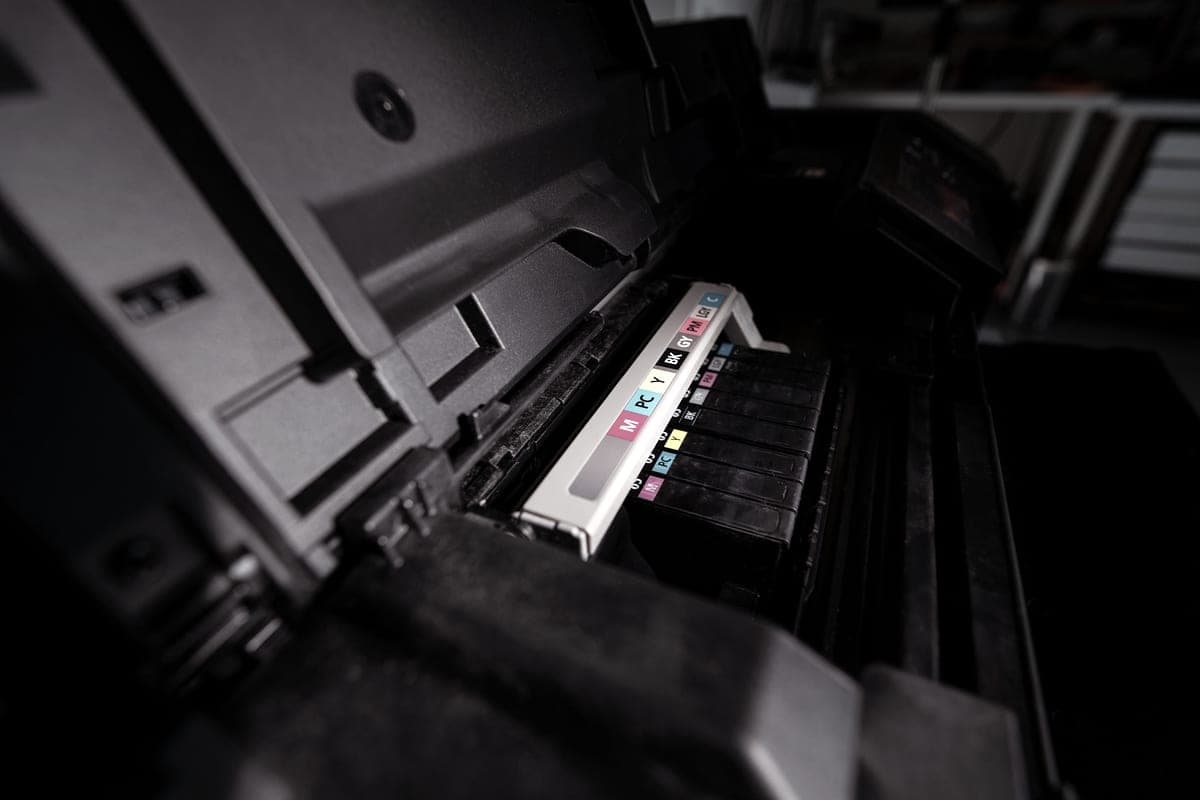
The printer is the loss leader. A machine that sells for under $100 contains a laser or a precision piezo print head, a scanner, a motor assembly and a radio. The price makes sense only if the buyer returns for supplies.
The starter supply is small. Brother publishes a 700-page starter cartridge on its household lasers. The first replacement arrives sooner than a buyer expects, and it costs what it costs.
Yields are quoted at 5% coverage. ISO page-yield standards assume a sparse page. Real documents, and especially anything with images, use more — so the published cost per page is a floor, not an average. Our method, in full.
The chip identifies the supply. A cartridge with a chip can be recognised, counted and in some cases rejected. That is the mechanism behind every firmware story in this niche. Printer DRM explained and HP Dynamic Security.
The two ways out
Bottles. A refillable tank printer costs more to buy and dismantles the model entirely: the ink arrives in a bottle, there is no chip, and the cost per page falls by roughly an order of magnitude. Three years at 100 pages a month is $14 of black ink on an EcoTank ET-2800 and $11 on a Canon MegaTank. Are tank printers worth it?
High-yield toner. If you print black text, a mono laser with a large cartridge gets you to a few cents a page with nothing that can dry out. The same three years at 100 pages a month is $48 on a Brother business cartridge against $218 on the dearest toner we priced — same pages, five times the money. The cheap-toner picks.
What does not work is buying the cheapest printer and hoping. That is the one decision the whole model is built around, and it is why the useful question at the shop is never what the printer costs. How to choose a printer walks the decision in order, and the calculator will do the arithmetic for your own volume.
Specifications and running costs side by side, for the printers discussed on this page.
Cost-per-page figures are our own arithmetic: supply price divided by the manufacturer’s rated page yield, using prices read on 27 September 2026 and yields rated at the ISO 5% coverage standard. They are not measured by us and they are not current prices. Every input, and the working · run the numbers for your own printing
The picks in detail
Cheapest escape from cartridges
Epson EcoTank ET-2800
The cheapest way to get genuinely low-cost color printing at home, as long as you can live without an auto duplexer or a document feeder.
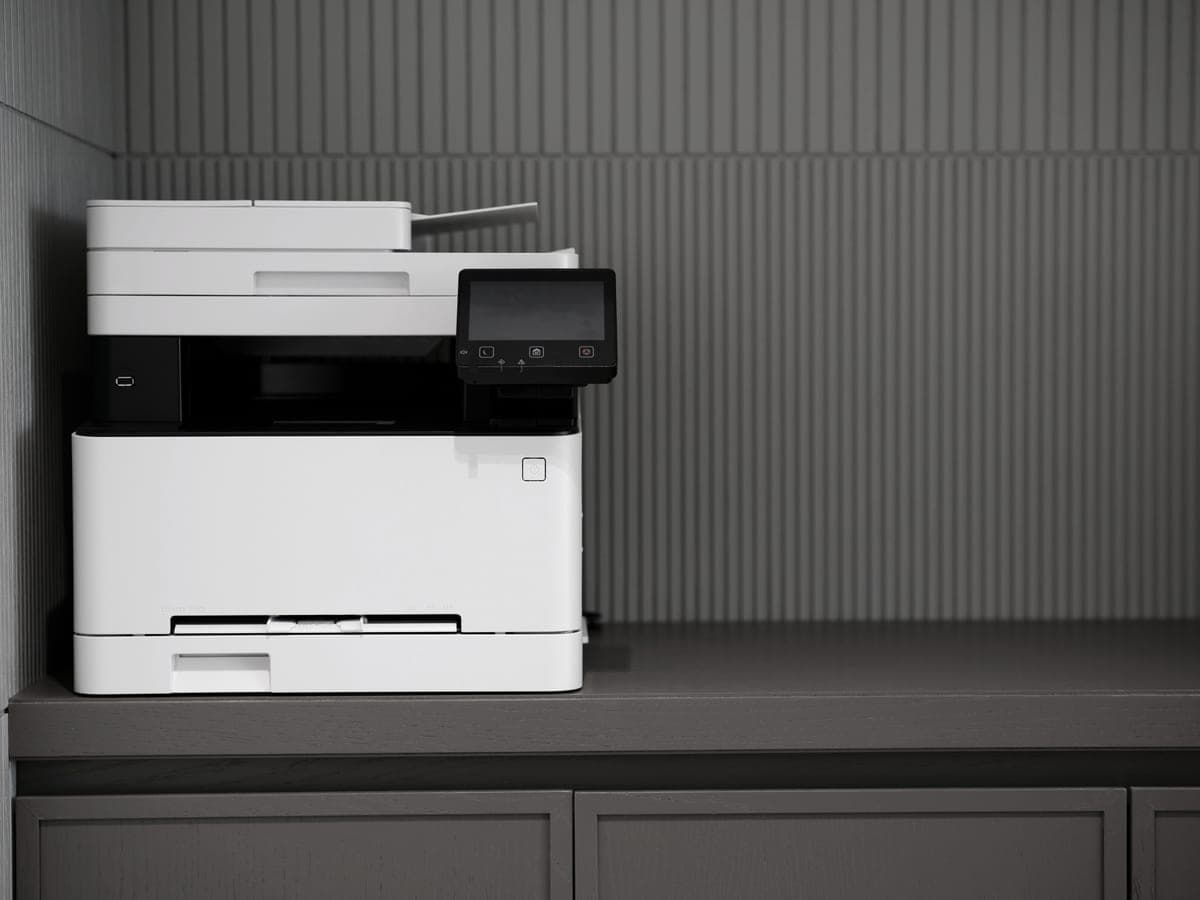
Illustrative photograph of this kind of printer. We do not have this model in hand and this is not a photograph of the unit.
#ad — we may earn a commission. How this site is funded. We do not show live prices; Amazon’s page is the price of record.
~0.4¢ per mono page · ~1.1¢ per color page
Based on a Epson 522 black ink bottle rated at 4,500 pages at $17.99, priced on 27 September 2026.
The color figure adds one per-page cost for each of the three color channels, because an ISO color page draws from all of them.
Epson 522 black ink bottle — rated 4,500 pages (ISO/IEC 24712), $17.99 at Epson US, checked 27 September 2026
Epson 522 color ink bottle — rated 7,500 pages (ISO/IEC 24712), $17.99 at Epson US, checked 27 September 2026
Yields are manufacturer-rated at the ISO 5% page-coverage standard, not measured by us, and real-world cost runs higher. Prices are not live: this is arithmetic on a price we read on the date shown, not a current price. How we calculate cost per page.
Among the lowest cost per page of any printer sold for home use
Refillable bottles, so no chipped cartridge can be locked out by firmware
Comes with enough ink in the box to last most households a long time
What you give up
No automatic two-sided printing, so paper costs twice what it needs to
Flatbed scanner only - no document feeder for multi-page scans
Inkjets still need to be used occasionally or the print head can clog
A 522 black bottle is $17.99 and rated for 4,500 pages, which is about 0.4 of a cent a page and roughly 1.1 cents for an ISO color page. There is no chip, no cartridge and nothing to lock out.
$239.99 at list for a printer that scans and copies too. No auto duplexer and no document feeder at that price, and it is an inkjet, so it wants using every week or two.
#ad — we may earn a commission. How this site is funded. We do not show live prices; Amazon’s page is the price of record.
~0.3¢ per mono page · ~0.8¢ per color page
Based on a Canon GI-21 pigment black ink bottle rated at 6,000 pages at $17.99, priced on 27 September 2026.
The color figure adds one per-page cost for each of the three color channels, because an ISO color page draws from all of them.
Canon GI-21 pigment black ink bottle — rated 6,000 pages (ISO/IEC 24712 (Canon default print mode)), $17.99 at Target, checked 27 September 2026
Canon GI-21 color ink bottle — rated 7,700 pages (ISO/IEC 24712 (Canon default print mode)), $12.99 at Target, checked 27 September 2026
Yields are manufacturer-rated at the ISO 5% page-coverage standard, not measured by us, and real-world cost runs higher. Prices are not live: this is arithmetic on a price we read on the date shown, not a current price. How we calculate cost per page.
List price
$248.99 at Office Depot, checked 27 September 2026
Supply type
Refillable ink bottles
Two-sided printing
Not stated on the spec page we read
Document feeder
None
Connectivity
Wireless
Subscription
None required
What we like
Lowest cost per page of any model on this site, mono and color
Pigment black ink smudges less on plain paper
Large 170 mL bottles, so refills are infrequent
What you give up
Canon's own store would not show us a price, so ours is a retailer listing
No document feeder
Canon's headline yields assume its default print mode, not draft mode
The cheapest printer to feed on this site. GI-21 bottles land at roughly 0.3 of a cent a mono page and about 0.8 cents an ISO color page, with a black bottle rated at 6,000 pages.
$248.99 on the retailer listing we read, a flatbed scanner, and a pigment black that resists water on plain paper. No feeder and no stated auto duplex.
#ad — we may earn a commission. How this site is funded. We do not show live prices; Amazon’s page is the price of record.
~3.3¢ per mono page
Based on a Brother TN830XL high-yield toner cartridge rated at 3,000 pages at $98.29, priced on 27 September 2026.
Brother TN830XL high-yield toner cartridge — rated 3,000 pages (ISO/IEC 19752), $98.29 at Brother USA, checked 27 September 2026
Yields are manufacturer-rated at the ISO 5% page-coverage standard, not measured by us, and real-world cost runs higher. Prices are not live: this is arithmetic on a price we read on the date shown, not a current price. How we calculate cost per page.
Dual-band wireless (2.4 GHz / 5 GHz), Ethernet or USB
Subscription
None required
What we like
Toner does not dry out, so it is ideal if you print in occasional bursts
Automatic two-sided printing at 36 pages per minute
Brother has publicly denied blocking third-party toner with firmware
What you give up
Black only - no color at all
Cost per page is roughly ten times a tank printer's
The 700-page starter cartridge runs out fast; budget for a TN830XL
Expensive ink is only half the problem; ink you throw away unused is the other half. Toner is a dry powder that does not dry out, so a printer that sits idle for two months prints perfectly on the day you need it.
$179.99 at list, 36 pages a minute, auto duplex, Ethernet and dual-band Wi-Fi, at about 3.3 cents a mono page. Black only.
Because printers are sold cheaply and the profit sits in the supplies. A small starter cartridge, yields quoted at 5% coverage and a chip that identifies the cartridge all support a business model where the consumable, not the machine, is the product.
+−Is printer ink really more expensive than it costs to make?
The clearest evidence is within one brand: Epson sells the same inkjet technology as chipped cartridges and as refill bottles, and the bottle works out at a fraction of a cent a page. The difference is pricing, not chemistry.
+−Is toner cheaper than ink?
Cheaper than cartridge ink, dearer than bottled ink. Our figures run from about 0.3 of a cent a page on bottles to about 1.3 cents on high-yield toner and about 6.1 cents on the dearest toner we priced.
+−How do I stop paying so much for ink?
Two options: a refillable tank printer if you print color, or a mono laser with a high-yield cartridge if you print text. Both move the money into the purchase price and out of the supplies.
+−Does third-party ink void my warranty?
Manufacturers do not warrant damage caused by another company supplies, and policies differ by brand and change over time. We cover each brand published position, with sources, on our ink freedom pages.
+−Why did my printer run out of ink so fast?
Usually the starter supply: printers ship with a partly filled or low-yield cartridge. Beyond that, real page coverage is higher than the 5% the yield is rated at, and inkjets use ink on head cleaning as well as on printing.