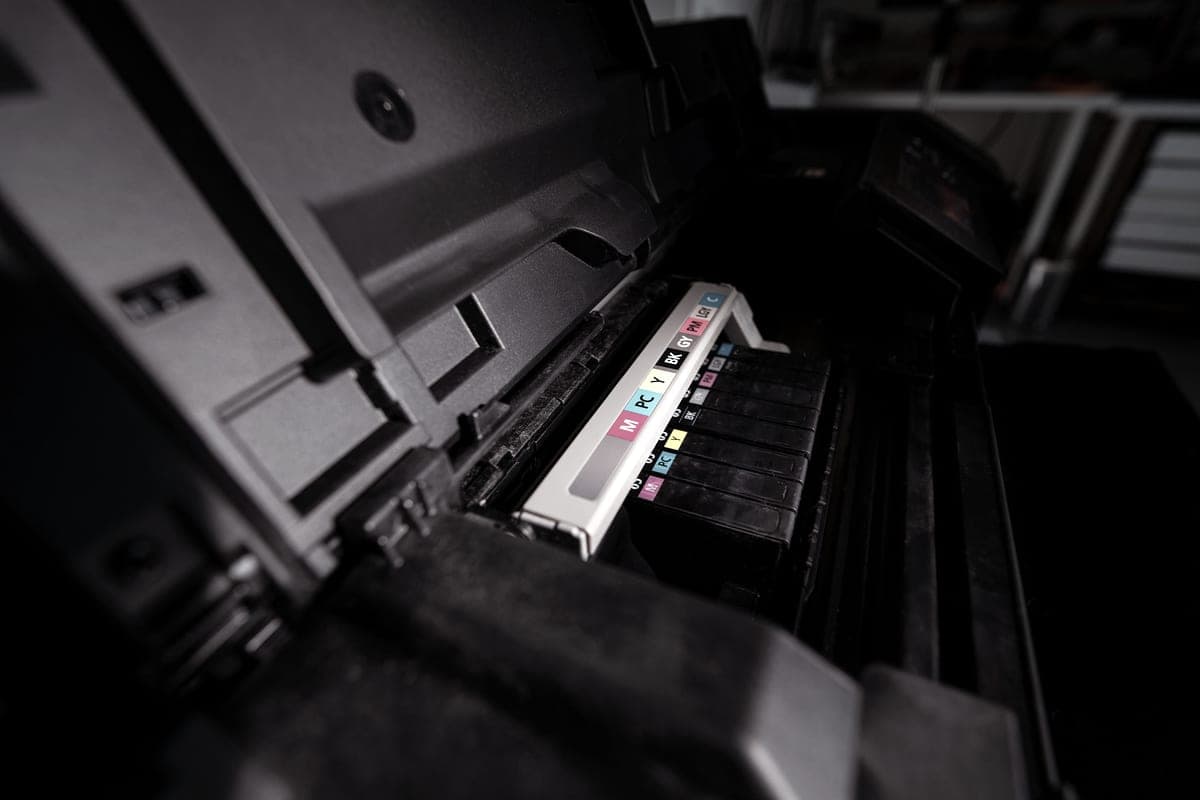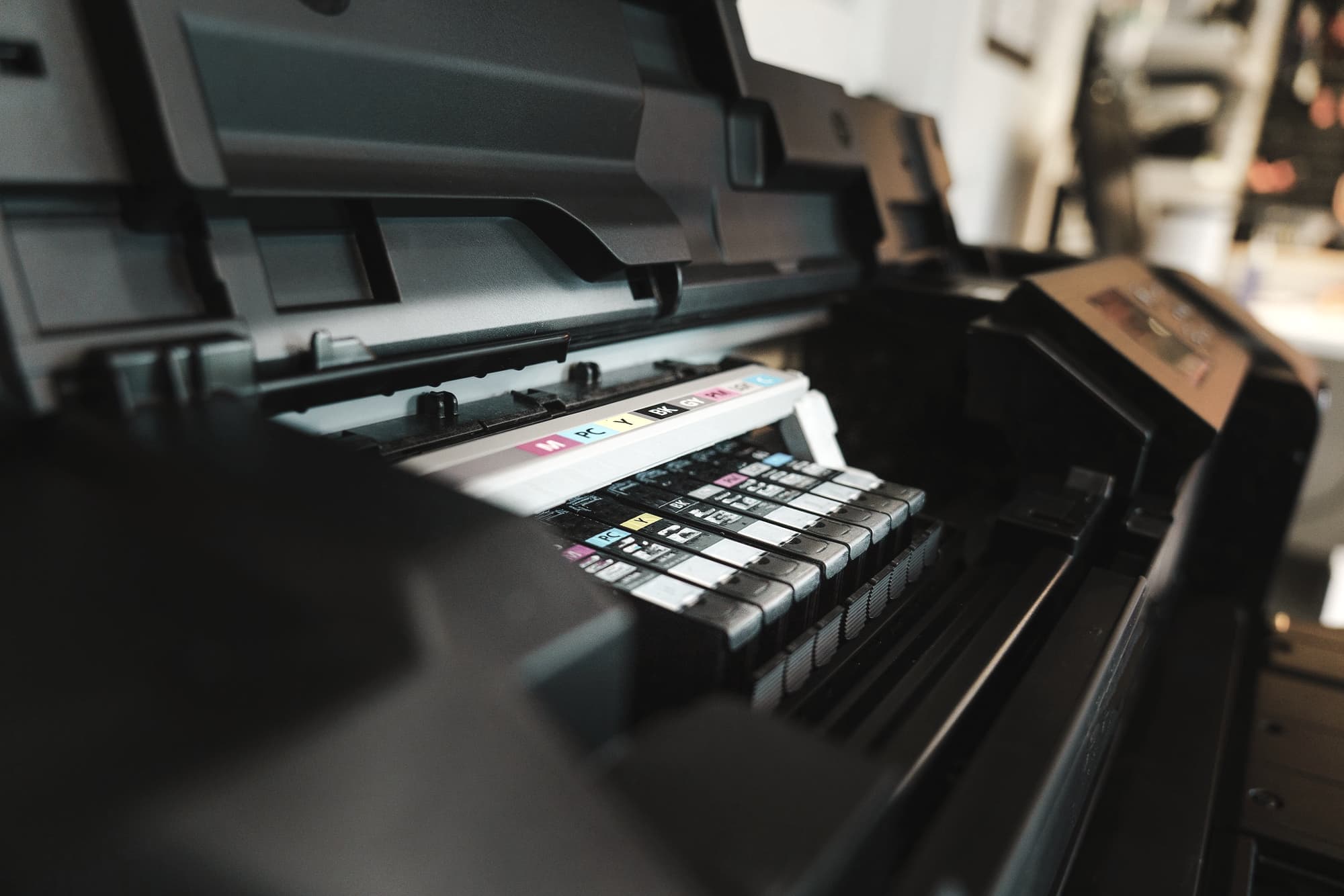
An ink tank printer replaces the cartridge with a refillable reservoir and a bottle. That one change is why the cost per page drops from something you notice to something you stop thinking about — and it is also why the printer costs more on the day you buy it.
The arithmetic, in one paragraph
A bottle of epson 522 black ink bottle is rated at 4,500 pages and listed at $17.99 on Epson’s own store when we checked on 27 September 2026. Divide one by the other and you get about four tenths of a cent a page. A cartridge inkjet is commonly quoted around seven or eight cents for the same black page. That is not a marginal improvement; it is roughly a twentieth of the cost, and it is the entire reason this product category exists.
Every figure like that on this site shows its inputs, links to its source, and carries the date we read the price. Here is the method, and here is a calculator so you can run it on your own printing rather than ours.
Who should buy one, and who should not
- Buy one if you print in color at all regularly. Color is where cartridge printers hurt most, and it is where the saving is largest.
- Buy one if you print more than about forty pages a month. Around there the supply saving starts paying back the higher sticker price inside the first year or two.
- Do not buy one to print ten black pages a month. You will not recover the extra hardware cost, and an inkjet that sits idle for months is the one printer most likely to disappoint you when you need it. Read the occasional-use case honestly before you spend the money.
The three systems, and what separates them
Epson EcoTank
The largest range and the one most roundups default to. Two ink families matter for home models: 522 (the entry-level ET-2400, ET-2800 and ET-4800) and 502 (the ET-2850 and ET-3850). The 502 black bottle is rated higher than the 522 black, so the cheaper printers do not necessarily have the cheaper ink. Full picks in the EcoTank roundup.
Canon MegaTank
Fewer models, larger bottles, and a pigment black rather than a dye black — which matters if your prints get handled, because pigment sits on the paper and resists smudging better. On the prices we read the MegaTank G3270 has the lowest cost per page of anything on this site. See the MegaTank roundup.
HP Smart Tank
Genuinely bottle-fed, and therefore genuinely free of the cartridge chip problem. We cover it but recommend it less, for one reason we can document: HP’s Dynamic Security behavior on its cartridge printers has made a lot of buyers unwilling to trust the brand at all, and we could not read a confirmed bottle price from HP on the day we checked, so we do not publish a cost per page for it.
What you are paying extra for
Once you have picked an ink family, the price differences between models are almost entirely hardware, not running cost. Two features are worth real money and the rest usually are not.
| Feature | Worth paying for? |
|---|---|
| Automatic two-sided printing | Yes. It halves your paper cost on anything longer than one page, every time, forever. |
| Automatic document feeder | Only if you scan multi-page documents. If you scan twice a year, a flatbed is fine. |
| Wired Ethernet | Worth it for a shared household printer, where Wi-Fi flakiness causes most of the swearing. |
| Fax | Almost never, unless a specific institution in your life still insists on it. |
| A larger color touchscreen | No. It does not change a single page you print. |
The mistake buyers make with tank printers
Two, and they are opposite failures. The first is buying far more printer than the printing justifies — a $350 machine with a document feeder for a household that prints homework. The second is buying a tank printer and then never using it, which is the one condition inkjets handle worst. If your printing is genuinely sporadic, a mono laser is the honest recommendation even though it costs more per page and pays us the same.
A word about third-party bottles
Because there is no chip in a bottle, nothing stops you filling an EcoTank or a MegaTank with cheaper third-party ink, and plenty of people do. We do not publish cost-per-page figures based on third-party ink, because yields are not rated to the ISO standard and we would be multiplying an unknown by a guess. The manufacturer’s own bottles are already under a cent a page; the remaining saving is small and the variable is warranty, not money.