
Do laser printers dry out?
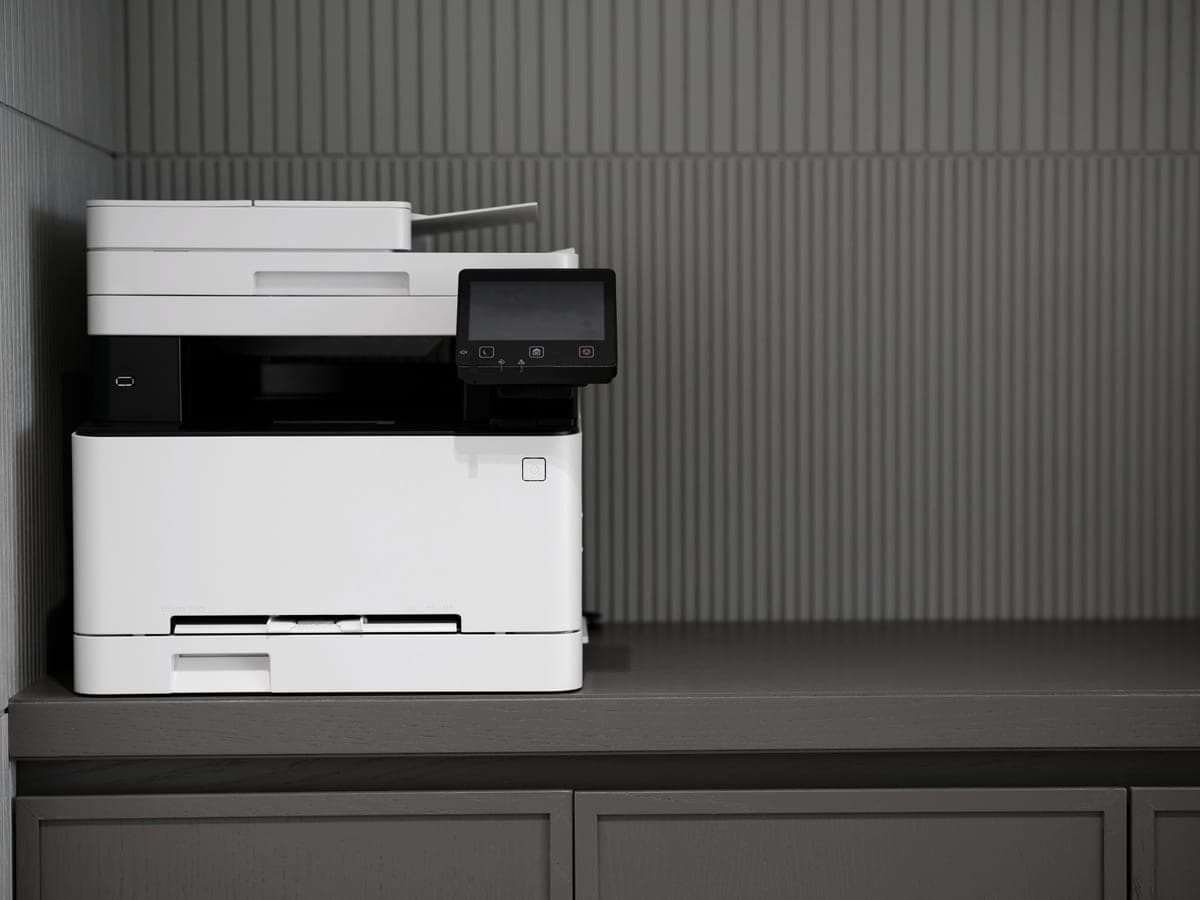
No. Toner is a dry plastic powder with no solvent to evaporate, and a laser has no print head with nozzles that could block. A laser left unused for months will print normally when you come back to it, which is the main reason to choose one over an inkjet.
This is the clearest yes-or-no answer on the site, and it decides more purchases than any cost figure. Below: why the answer is so definite, what genuinely can degrade over a long time, and why this matters more than cost per page for a lot of households.
Why a laser cannot dry out
Drying out requires something to dry. An inkjet contains liquid ink held at microscopic nozzles, and when the printer sits unused the solvent at the nozzle face evaporates, leaving material that can block it.
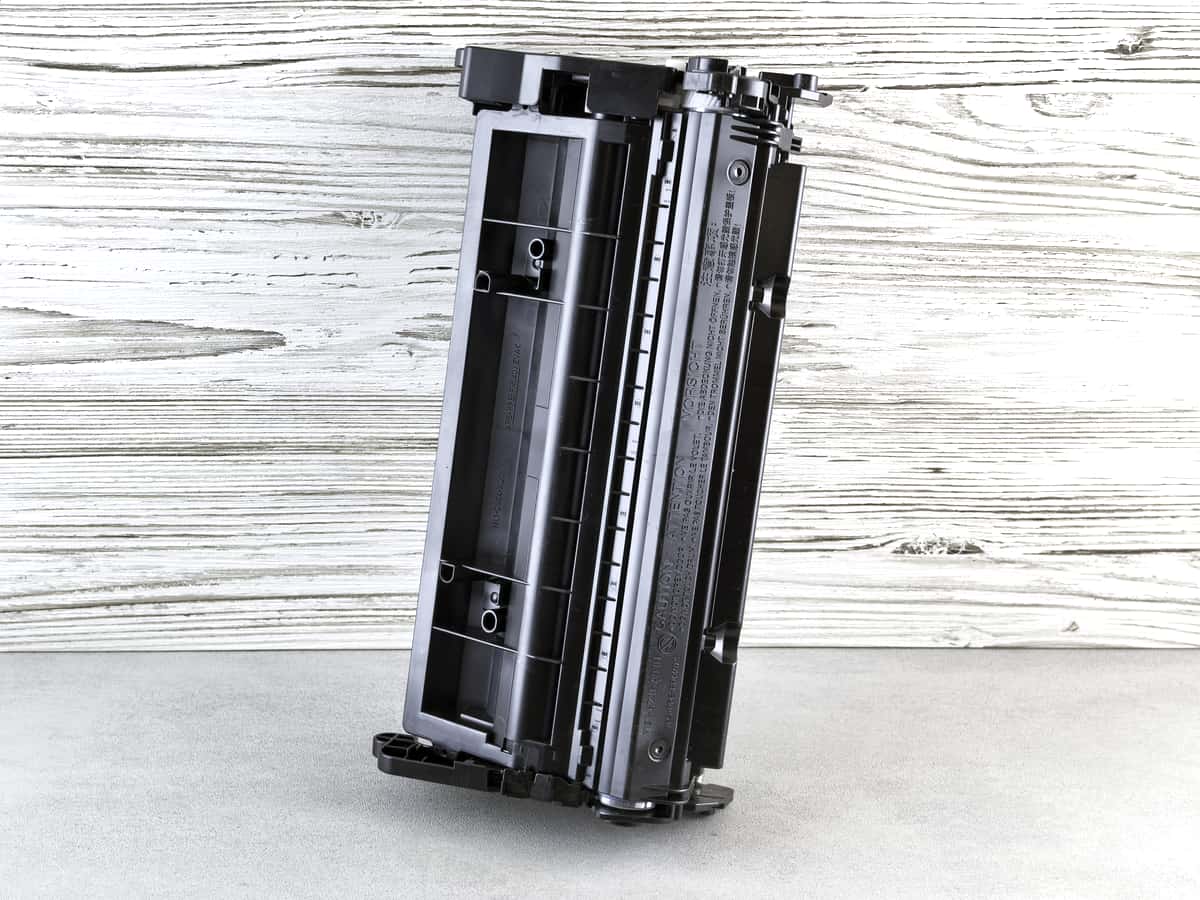
A laser has none of that. Toner is a fine plastic powder. It is charged electrostatically, attracted to a drum, transferred to paper, and melted by a hot fuser so it bonds. There is no liquid at any point, no nozzle to block, and nothing that evaporates. The printer is physically incapable of the failure mode people are asking about.
There is also no maintenance cycle quietly consuming supplies. An idle inkjet runs head cleans that use ink you never see on paper; an idle laser uses nothing at all.
What genuinely can happen over a long time
Nothing dries, but toner cartridges are not eternal. Over a period of years:
- Toner can clump in extreme humidity. It is a powder, and powders can absorb moisture. Store spares somewhere cool and dry; a normal cupboard is fine.
- Rubber rollers harden with age. This is the most likely genuine age-related fault on a long-idle laser, and it shows up as paper misfeeds rather than as a print-quality problem.
- The drum has a page life — Brother rates the DR830 at approximately 15,000 pages — but that is a usage limit, not a time limit.
- The first print after a long gap may be slightly uneven. Print one more page and it settles. Nothing to do with drying.
Unopened toner keeps for years. Manufacturers print best-before style dates on cartridges, and in practice they are conservative.
Why this question decides purchases
Because a printer that does not work when you need it has cost you more than any cartridge. The cost-per-page argument that runs through this entire site assumes the printer works; if it does not, the arithmetic is irrelevant.
| Mono laser | Ink tank inkjet | |
|---|---|---|
| Cost per black page | ~3.3¢ | ~0.4¢ |
| After four idle months | Prints normally | May need a head clean; can clog |
| Uses supplies while idle | No | Yes — automatic head cleaning |
| Color | No | Yes, very cheaply |
| Photographs | No | Yes |
Cost figures are our arithmetic on prices read 27 September 2026. The second and third rows are why we recommend a laser to anyone who cannot promise regular use, despite the first row. The full comparison at several volumes.
So the rule we keep repeating: below roughly twenty to forty pages a month, or where printing arrives in unpredictable bursts, buy a laser. The ink saving you are giving up is a few dollars a year and the reliability you are buying is the whole point.
If you already have an inkjet
The problem is manageable rather than fatal:
- Print one page every couple of weeks, in color so every channel moves. On a tank printer that costs a fraction of a cent.
- Leave it plugged in and powered, so it can run its own maintenance.
- Do not leave the tanks or cartridges empty. Air in the lines is harder to recover from than low ink.
- Run a head clean after a long gap if output is streaky, and expect it to use ink.
Two related questions
Do color laser printers dry out? No, for exactly the same reason — all four toners are dry powders. A color laser is the only way to get color printing that tolerates months of disuse, which is the narrow case where a color laser makes sense.
Does toner expire? Not meaningfully. Unopened cartridges keep for years in a cool dry place. How long toner lasts.