Does Canon allow third-party ink?
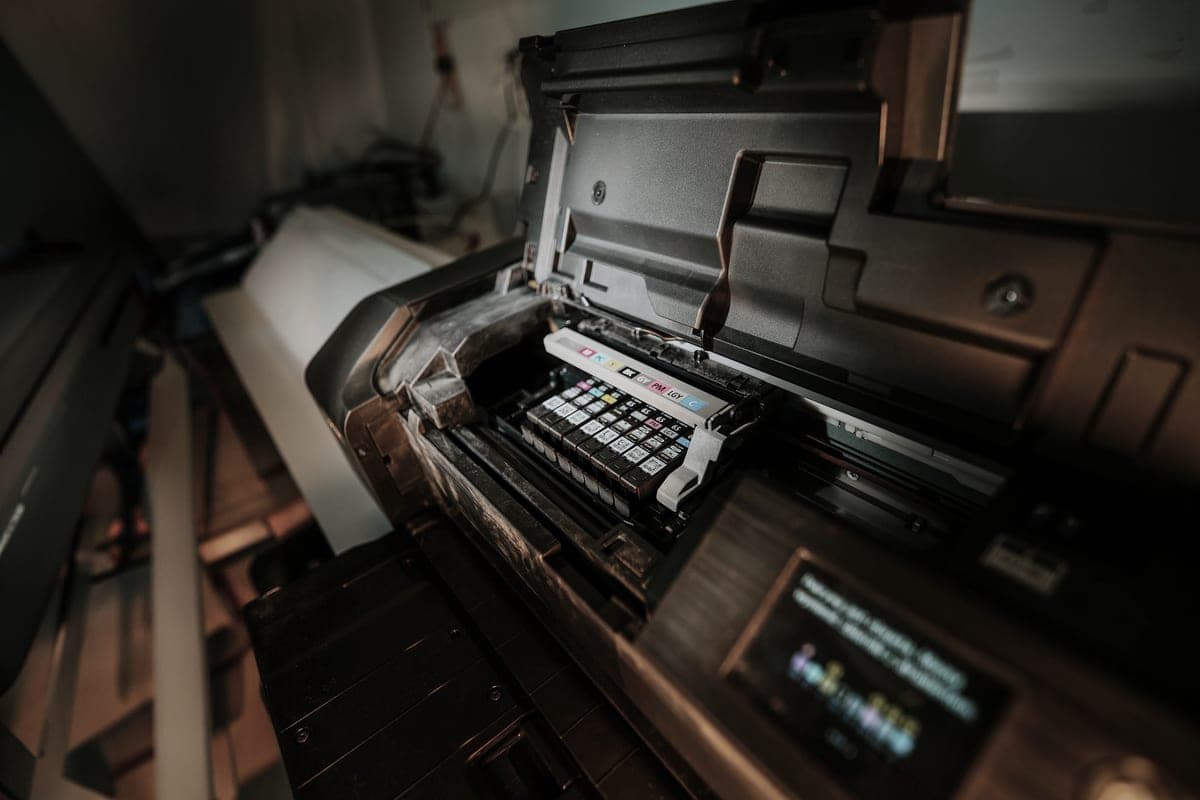
Canon does not prohibit third-party ink, and using it does not by itself void the printer warranty — though damage attributable to a non-Canon supply is not covered. Canon cartridges do carry chips that can produce warnings, and in 2022 Canon itself published guidance on bypassing those warnings during a semiconductor shortage.
This page sets out what we can confirm about Canon and non-Canon supplies, and says plainly where we cannot. It is a claim about a named company’s conduct, so every statement below carries the reporting it came from and the date it was read.
The episode that tells you the most
In January 2022 Canon shipped toner and ink supplies without their usual semiconductor components, because of the global chip shortage, and published guidance for customers on how to dismiss the resulting error messages and keep printing. The story was reported by Tom’s Guide and widely discussed via Slashdot.
Canon’s own framing, as quoted in that reporting, was that it had “chosen to supply consumable products without the semiconductor component until normal supply resumes”, and that while print quality was unaffected, certain ancillary functions such as detecting supply levels might be. That is a useful admission for any buyer: the chip is doing supply-level reporting and authentication, not printing.
The warranty question
Reporting of Canon’s position, summarised in discussions among printer technicians, is that Canon does not prohibit third-party inks and that using them does not in itself invalidate the limited warranty — but that damage caused by a third-party supply is excluded from cover, with any resulting repair at the owner’s expense. We were not able to read that wording on a current Canon US page on the date we checked, so we present it as reported rather than as a quotation we verified first-hand.
That distinction is worth holding onto generally, and not only for Canon. “Using non-brand ink voids your warranty” is a claim people repeat about every manufacturer and it is usually wrong. What manufacturers actually exclude is damage caused by the supply, which is a narrower thing.
The split that matters when buying a Canon
Canon sells two quite different kinds of printer and the supply question is different on each.
| Line | Supply format | Chip present? | What that means |
|---|---|---|---|
| PIXMA MegaTank (e.g. G3270) | GI-21 ink bottles | No - a bottle has nothing to authenticate | Firmware cannot lock out a refill; you pour ink into a reservoir |
| imageCLASS mono laser (e.g. LBP6030w) | Canon 125 toner cartridge | Cartridge-based | Third-party cartridges are widely sold; any check lives in the cartridge and firmware |
| PIXMA cartridge inkjets | Chipped ink cartridges | Yes | The line the 2022 chip-shortage guidance applied to |
Supply formats as published on the Canon specification pages recorded in our product registry. We make no claim about whether any specific firmware version blocks any specific third-party cartridge; we have not tested that and we will not assert it.
If avoiding the question entirely is the point of your purchase, the MegaTank line does that structurally rather than by policy. There is no chip in a bottle of GI-21, which is why we recommend it on cost and on freedom at the same time — it runs at about 0.3 of a cent a mono page on the bottle prices we read. Our MegaTank roundup.
Canon against the other three brands
We cover each maker separately because the records genuinely differ, and summarising them into a league table would flatten distinctions that matter.
- Canon. No prohibition on third-party ink, chips on cartridge lines, and a documented instance of publishing bypass guidance for its own chip checks. Bottle-fed MegaTank models sidestep the issue.
- HP. Operates an explicitly named firmware feature, Dynamic Security, which has blocked non-HP cartridges on affected models. What it is and which printers have it.
- Brother. Accused in 2025 of blocking third-party toner by firmware, and publicly denied it. An unresolved dispute, reported as one. Both sides, with sources.
- Epson. Has faced repeated US class actions alleging that firmware updates disabled printers using non-Epson cartridges. The complaints and what they allege.
Sensible precautions on any Canon cartridge printer
- Prefer a bottle-fed MegaTank if supply freedom is the reason you are buying. No chip, no dispute, and the lowest cost per page we have confirmed on this site.
- Keep a genuine cartridge on hand on a cartridge printer. If a third-party supply ever stops being accepted, you are inconvenienced rather than stopped.
- Read what a firmware update says before accepting it. Updates deliver security fixes as well as supply checks, so declining everything indefinitely has its own cost.
- Buy third-party supplies from a seller with a returns policy. The commonest real-world problem is a bad batch, not a lockout.
What we cannot confirm
We do not know, and do not claim to know, whether any particular current Canon firmware version rejects any particular third-party cartridge. We have no units in hand, no lab, and we will not convert user reports into a general statement about a product line. If you have a specific model in mind, the reliable test is the current discussion among owners of that exact model.
We also do not publish third-party supply prices or cost-per-page figures, because we cannot verify their yield claims. Every figure on this site uses genuine manufacturer supplies, which makes it the worst case — your own cost can only be lower.
We will revisit this
Supply policies change, and this page is dated for that reason. It reflects what we could confirm as at 7 October 2026. If Canon publishes a clearer statement, or if a firmware change is credibly reported, this page changes rather than quietly staying wrong.