
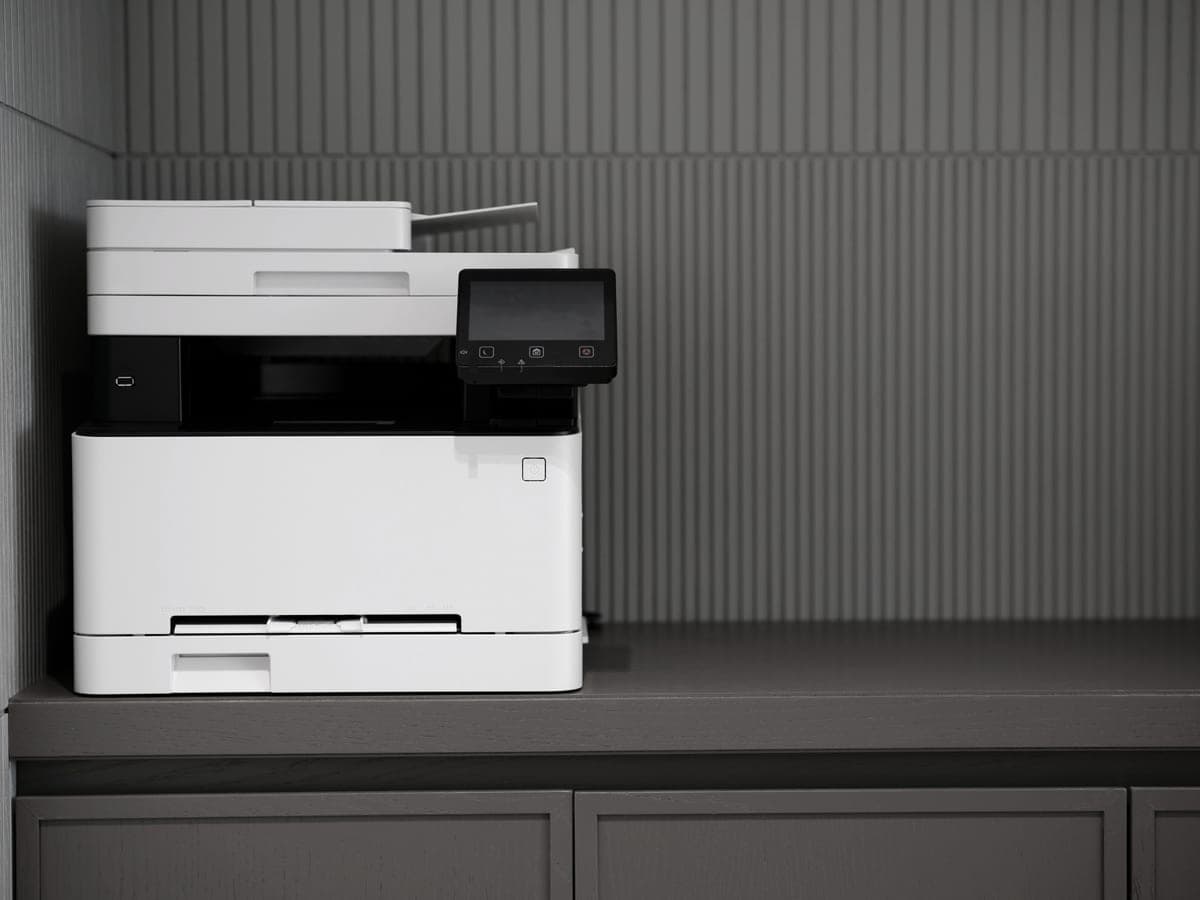

A home is not a small office that prints less. It prints differently: rarely, unpredictably, and usually because something is due. Every sensible recommendation for a home laser follows from that — including the recommendation not to buy one.
How we picked
We filtered on three things a household actually experiences. First, whether the printer works after weeks of neglect, which every laser does and which is the only real reason a laser makes sense at home. Second, automatic two-sided printing, because it halves the paper bill on anything longer than a page and most cheap lasers omit it. Third, the cost of the cartridge, because a household buys one every year or two and remembers the price.
We deliberately did not filter on print speed or monthly duty cycle. No household has ever hit a duty cycle limit, and the difference between 24 and 36 pages a minute on a four-page document is about two seconds.
Should a home buy a laser at all?
Two honest tests, and they settle almost every case.
- Do you print in color? If yes, and more than a few pages a month, buy a refillable tank printer instead. Color on a laser is expensive per page in a way that compounds quietly.
- How many pages a month? Under about forty, a mono laser is cheaper to own over three years despite the dearer toner, because the lower purchase price is never repaid by the tank printer’s supply saving. Above it, the tank printer pulls ahead and keeps going. The arithmetic at several volumes.
The one mistake households make
Both Brother models here ship with a starter cartridge rated at 700 pages, and the replacement most people buy is the standard TN830, because it is cheaper on the shelf. That cartridge is rated at 1,200 pages and works out at about 5.1 cents a page. The high-yield TN830XL is rated at 3,000 pages and costs about 3.3 cents.
Same printer, same page, half again the cost, forever. Buy the high-yield one.
What a home laser actually costs to run
At a genuinely typical household volume — call it forty pages a month — three years of high-yield toner comes to $47. That is the number worth holding on to: roughly one cartridge, spread across three years, on a printer that cost $179.99. Published industry figures put mono laser printing at around 5 to 8 cents a page, per Toner Buzz, so these models sit at the good end of normal for the technology.
Do not forget the drum. Brother rates the DR830 at approximately 15,000 pages and sells it separately. At forty pages a month you will not reach it in thirty years, which is exactly why we mention it and then tell you to ignore it.
Where it goes in the house
Lasers are heavier and warmer than inkjets, and the fuser makes a brief noise on wake. None of the three models here needs its own room, but all of them want a shelf rather than a desk corner, and all three have Ethernet if that shelf happens to be near the router.
Printing from phones and tablets needs no app: all three support AirPrint, which requires the printer and the device to be on the same Wi-Fi network and nothing else installed. The AirPrint models in detail.