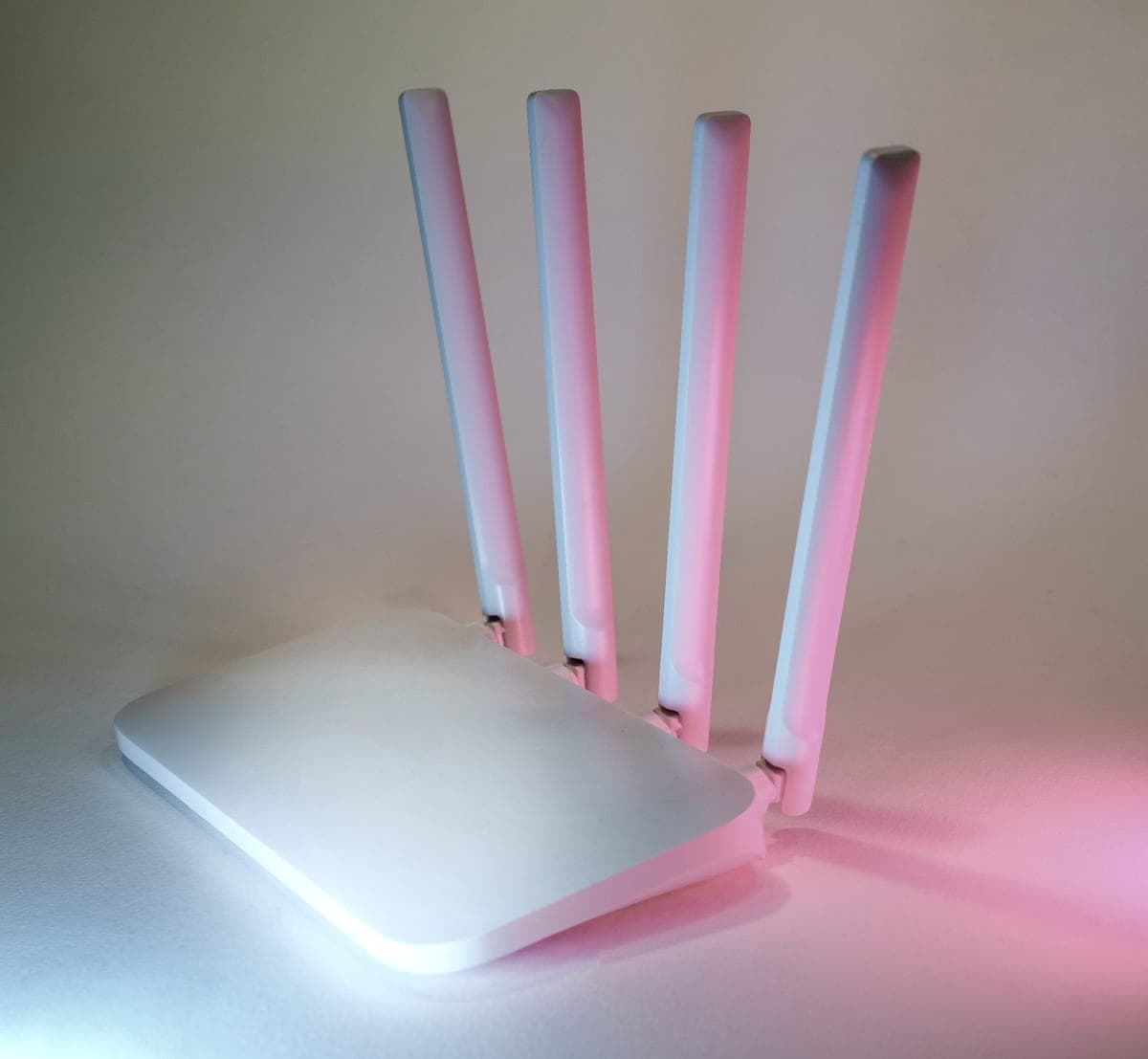
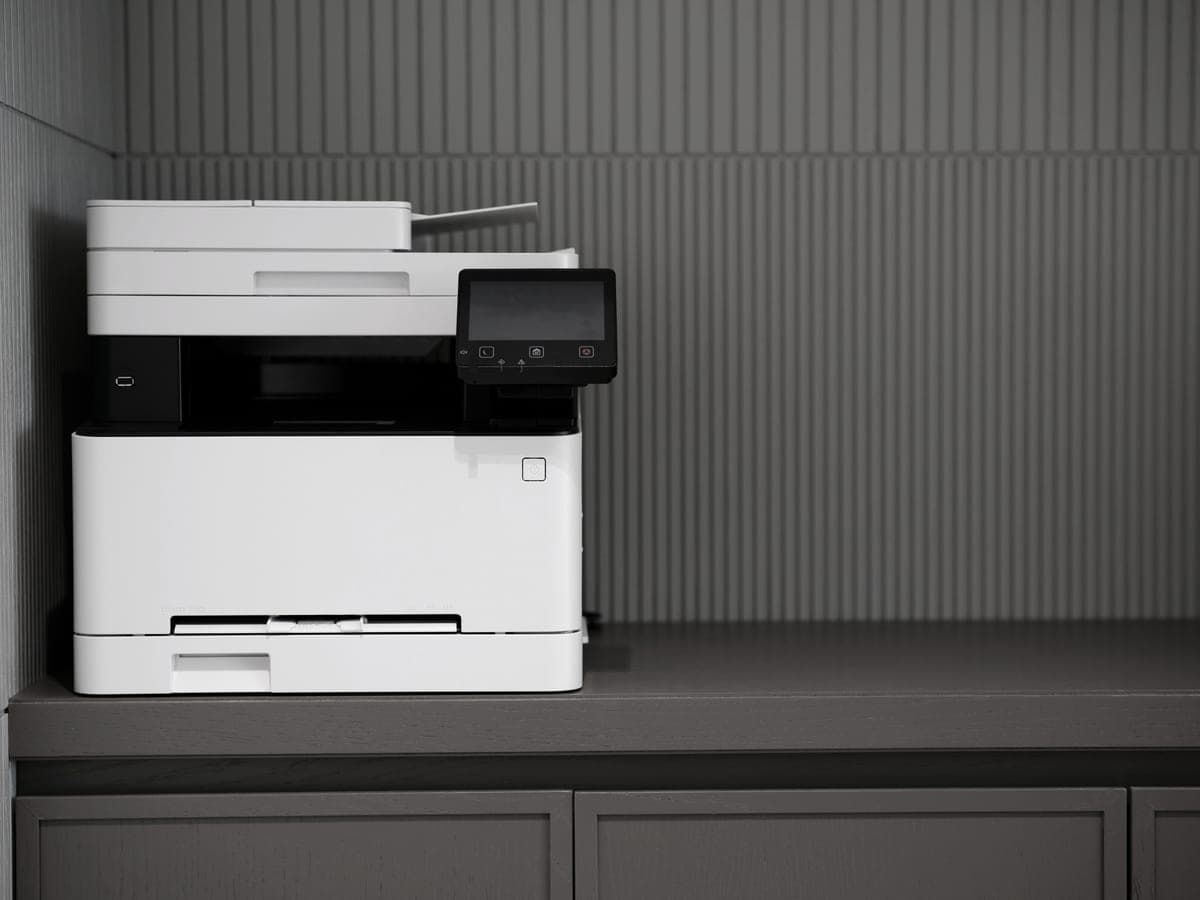
Wi-Fi is how most home printers are connected and a cable is how most of them should be. A wired port removes the single most common printer complaint — the printer that is offline again — and it makes something else possible that Wi-Fi does not: a printer on your network that has no route to the internet at all.
How we picked
A published Ethernet port was the entry requirement; everything without one was excluded regardless of how good it is. Beyond that we ranked on cost per page from the cartridge each printer takes, then on whether the machine scans, then on paper capacity for the shared case.
Every pick here also publishes dual-band wireless, so the cable is an option rather than an obligation. Nothing on this page needs an app or an account in order to print.
What a wired port actually buys you
- It does not drop. A printer in a hallway cupboard behind two walls is the classic bad Wi-Fi location, and it is also where printers live. A cable does not care.
- A fixed address. Wired printers are easier to pin to one IP, which is what stops the “printer not found” cycle after a router restart.
- No internet required. On a wired printer you can decline every cloud feature and still print from every device in the house. The printer joins your network, not the internet. How that works in practice.
- Faster to set up. No password, no WPS button, no app. Plug it in and the printer appears.
| Printer | Ethernet | Wireless | Scanning | Per page |
|---|---|---|---|---|
| Brother HL-L2460DW | Yes | Dual-band 2.4 / 5 GHz | None | ~3.3¢ |
| Brother DCP-L2640DW | Yes | Dual-band | Flatbed + 50-page ADF | ~3.3¢ |
| Brother MFC-L2820DW | Yes | Dual-band 2.4 / 5 GHz | Flatbed + 50-page ADF | ~3.3¢ |
| Brother HL-L5210DW | Gigabit | Dual-band 2.4 / 5 GHz | None | ~1.9¢ |
| Brother HL-L6210DW | Gigabit | Dual-band 2.4 / 5 GHz | None | ~1.3¢ |
| Canon imageCLASS LBP6030w | No - wireless only | Wireless | None | ~6.1¢ |
Connectivity as published on each model's manufacturer specification page, recorded in our registry. Cost per page is our arithmetic on genuine supply prices and manufacturer-rated ISO yields.
The pattern is worth noting: on the lasers we cover, Ethernet is standard across the Brother range including the $179.99 entry model, and absent on the Canon. If a wired port is a requirement, the shortlist is short.
Does Gigabit Ethernet matter?
Barely, for printing. A print job is small by modern network standards and 100-megabit Ethernet has never been the bottleneck — the printer’s own rendering and paper handling are. Brother publishes Gigabit on the HL-L5210DW and HL-L6210DW and plain Ethernet further down the range, and you would not notice the difference on a document.
Buy those two machines for their cartridges and their trays, which are real advantages, rather than for the port speed. The cost-per-page case is laid out in best laser printers for high volume.
Setting up a printer several people share
- Connect the printer by cable to a router or switch port and let it take an address. Note the address from the printer’s own front panel.
- Reserve that address in your router’s DHCP settings so it never changes. This single step prevents most “printer offline” problems.
- Install the manufacturer’s driver on each computer and add the printer by that address rather than by discovery. Discovery is convenient and fragile; an address is neither.
- For phones, leave the printer’s AirPrint and Mopria support enabled. Both work over a wired printer on the same network with nothing installed on the phone.
- If you want the printer to have no internet access, block its address at the router. Printing, scanning and copying all continue to work.
What these cost to run
Networking is free; the cartridge is not. The spread across this page is more than twofold, from about 1.3 cents a page on the HL-L6210DW to about 3.3 cents on the entry models, and the Canon that has no Ethernet is also the dearest to run at about 6.1 cents.
| Cartridge | Rated yield | Price we read | Per page |
|---|---|---|---|
| Brother TN830XL high-yield toner cartridge | 3,000 pages | $98.29 | ~3.3¢ |
| Brother TN830 standard-yield toner cartridge | 1,200 pages | $60.99 | ~5.1¢ |
| Brother TN229XL black high-yield toner cartridge | 3,000 pages | $96.29 | ~3.2¢ |
| Canon 125 black toner cartridge | 1,600 pages | $96.95 | ~6.1¢ |
Yields are manufacturer-rated (ISO/IEC 19752 for mono, 19798 for color); prices read on 27 September 2026 from the sources at the foot of this page. Our arithmetic is supply price divided by rated yield — the method.
At a few dozen pages a month those differences do not matter and you should buy the $179.99 machine. At a few hundred they matter a great deal — put your own volume in.