
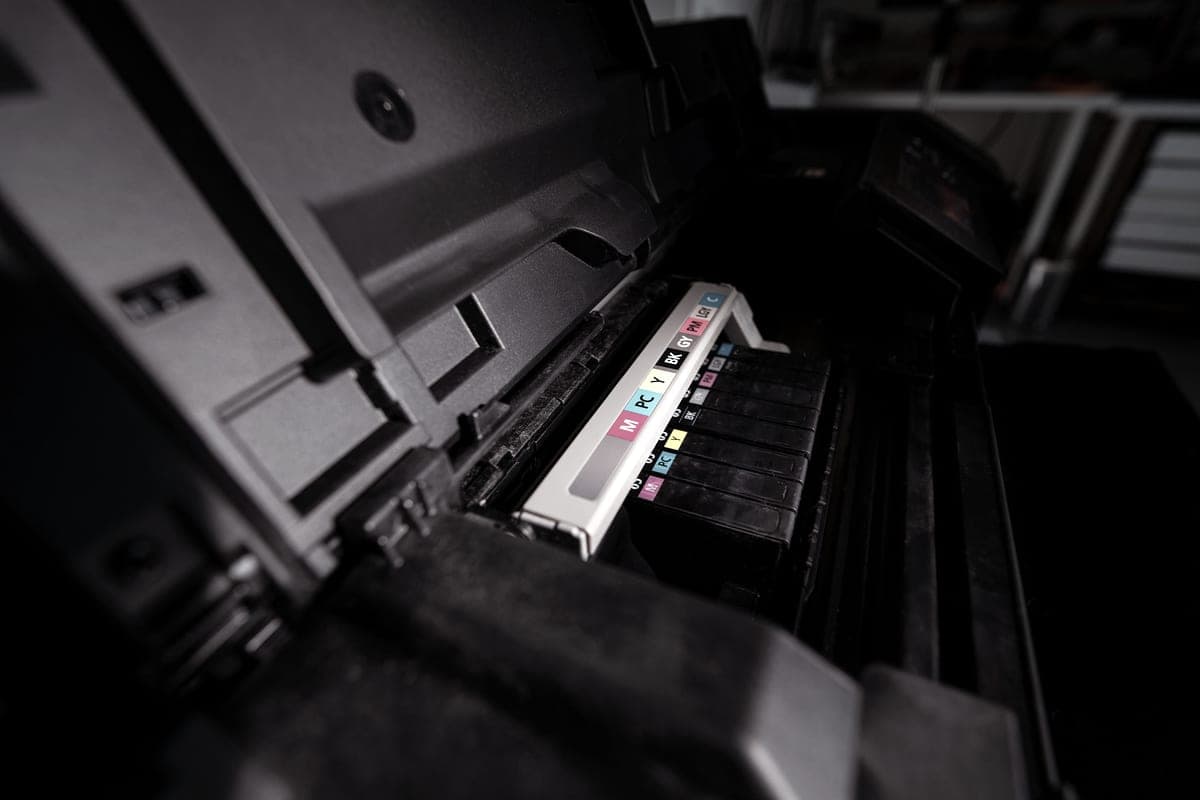



If you only take one thing from this site, take this: color is where the cost difference between printing technologies stops being interesting and becomes absurd. A four-color page costs under two cents on every bottle-fed printer here. On a cartridge inkjet, published figures put it around twenty.
How we picked
Color cost per page was the primary criterion, computed as the black channel plus three color channels, because that is what an ISO color page actually draws. That immediately sorts bottle-fed printers above everything else, by roughly an order of magnitude.
We then separated the picks by what they are good at rather than ranking them flat: pigment black for documents that get handled, dye black for photographic output, and a color laser for the narrow case where reliability after long idle periods matters more than the cost of the page.
Why color is where the gap explodes
A black page draws from one supply. A four-color page draws from all of them, so every inefficiency in the supply model is multiplied by four. On a cartridge printer that means four small, chipped, individually-priced cartridges. On a tank printer it means four bottles you bought once and will not think about for a year.
| System | Per color page | Basis |
|---|---|---|
| Canon GI-21 bottles | ~0.8¢ | Our arithmetic on Canon's rated yields and Target prices, 27 Sep 2026 |
| Epson 522 bottles | ~1.1¢ | Our arithmetic on Epson's rated yields and prices, 27 Sep 2026 |
| Color laser | between 12 and 15 cents a page | Toner Buzz's published range, not measured by us |
| Cartridge inkjet | about 20 cents a page | Toner Buzz's published range, not measured by us |
Read the two bottom rows as other people’s figures, cited rather than claimed — Toner Buzz. The top two are ours, with inputs shown on the method page.
Pigment or dye black, and why it matters here
Canon’s MegaTank uses a pigment black; Epson’s entry EcoTanks use dye. Pigment sits on the paper surface rather than soaking in, which gives crisper text and much better resistance to smudging and water. Dye soaks in, which gives richer, deeper blacks on glossy photo paper.
So the honest rule is: documents with color elements, pigment; photographs, dye or a dedicated photo ink set. It is one of the few genuine print-quality distinctions we can explain from a physical mechanism rather than from looking at prints, which is why it appears here and other quality comparisons do not.
When a color laser makes sense anyway
Narrowly, and it is a real case. If you need occasional color, it must not smudge, and the printer will sit idle for weeks at a time, a color laser is the only technology that delivers all three. You are paying several times a tank printer’s cost per color page for the privilege of ignoring the machine, and if you print little enough that trade can be rational.
Who should not buy a color printer at all
Plenty of people. If your printing is essays, invoices, forms and boarding passes, color adds cost and an extra failure mode for nothing. A mono laser plus a print shop for the occasional color job is genuinely cheaper and simpler, and we would rather say that than sell you a color printer you do not need.