Skip to content
Tank & Toner
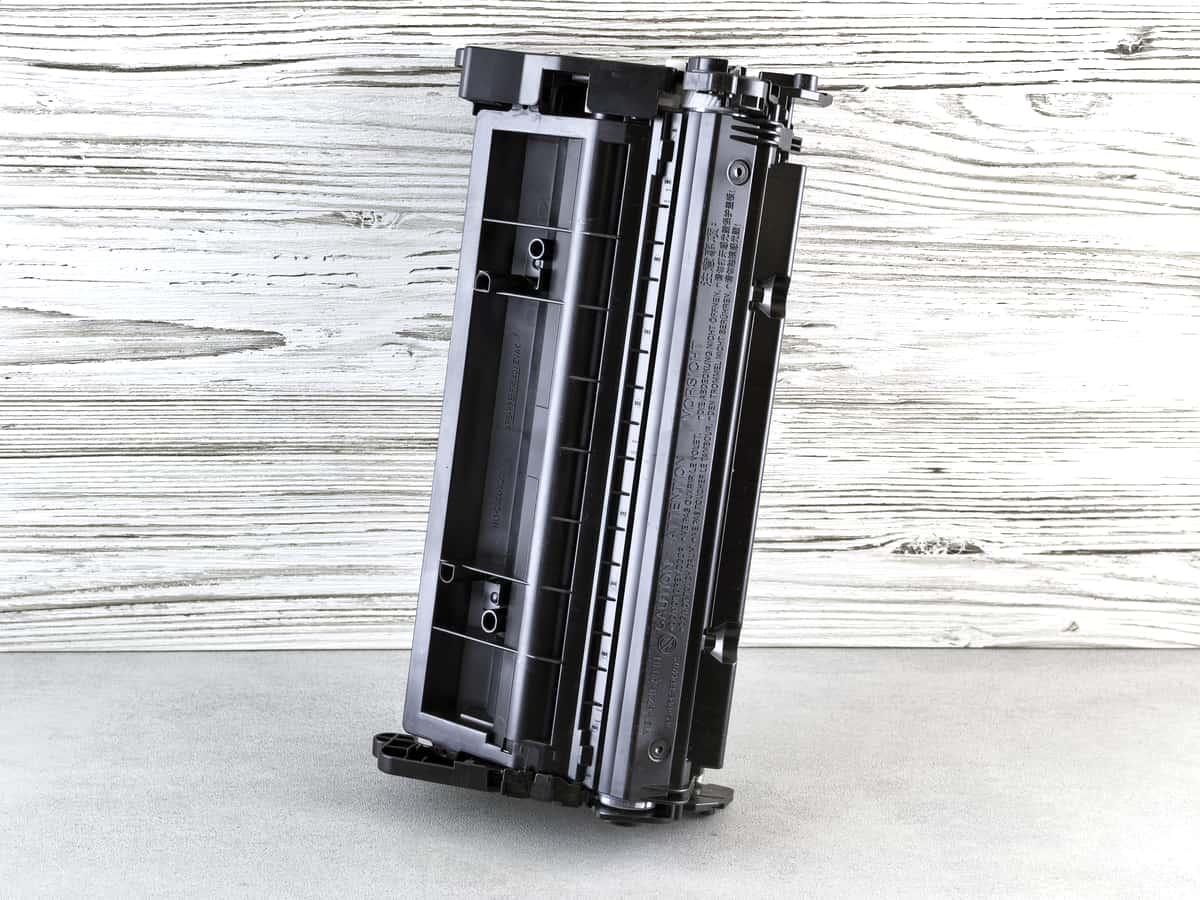
A black printer toner cartridge against a wooden background

Guides

Are there printers that don't use ink?

Two answers, and one of them is better than people expect. Lasers replace ink with toner powder; thermal printers replace it with heat and print no documents at all.

By Ryder M. · Published October 4, 2026

Quick picks

Our ranked picks for are there printers that don't use ink?, with the cost per page beside each one. Tap a row to jump to the full write-up.

Our ranked picks for are there printers that don't use ink?, with the cost per page beside each one. Tap a row to jump to the full write-up.
#ProductBest forCost per pagePrice
1
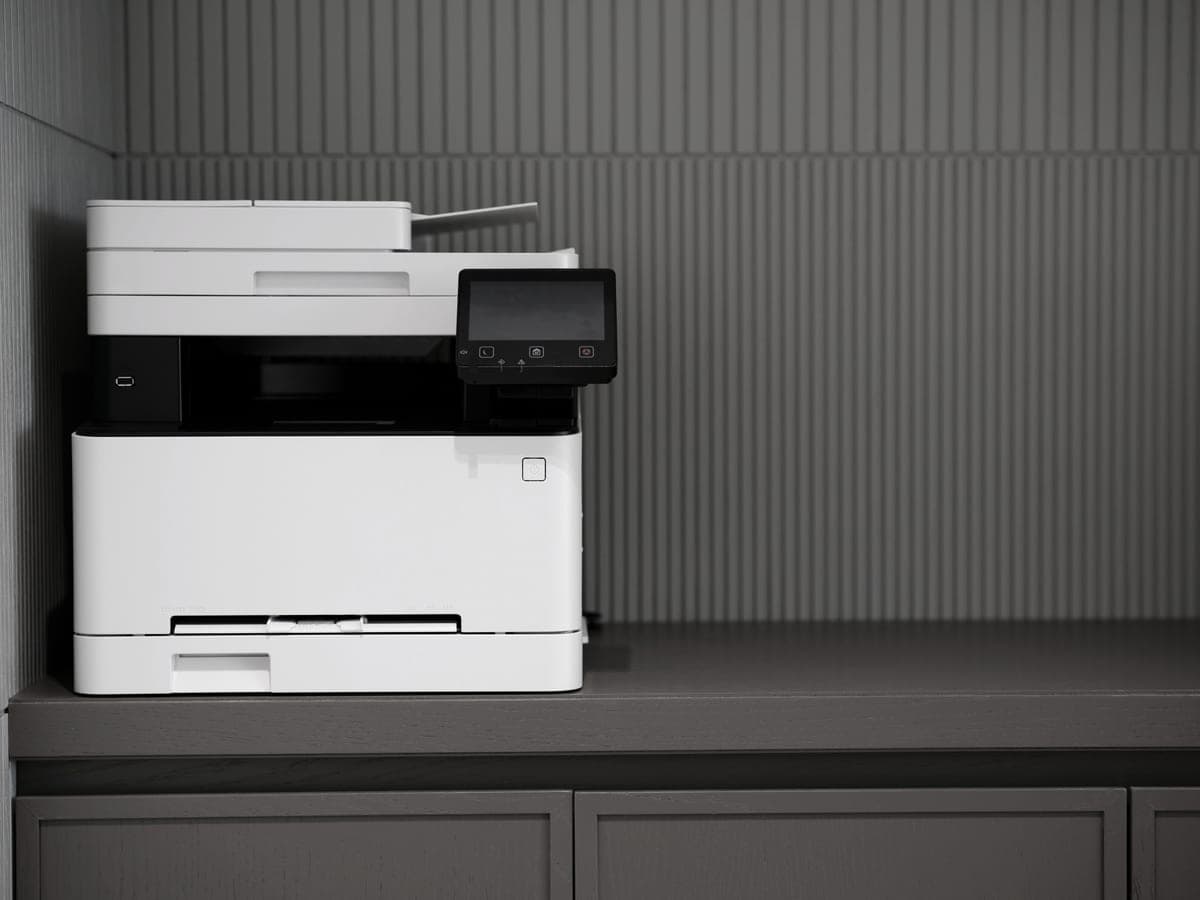
A modern printer on a minimalist office desk
Brother HL-L2460DWToner powder instead of ink, about 3.3¢ a page, nothing to dry out
Best printer with no ink in it~3.3¢
2
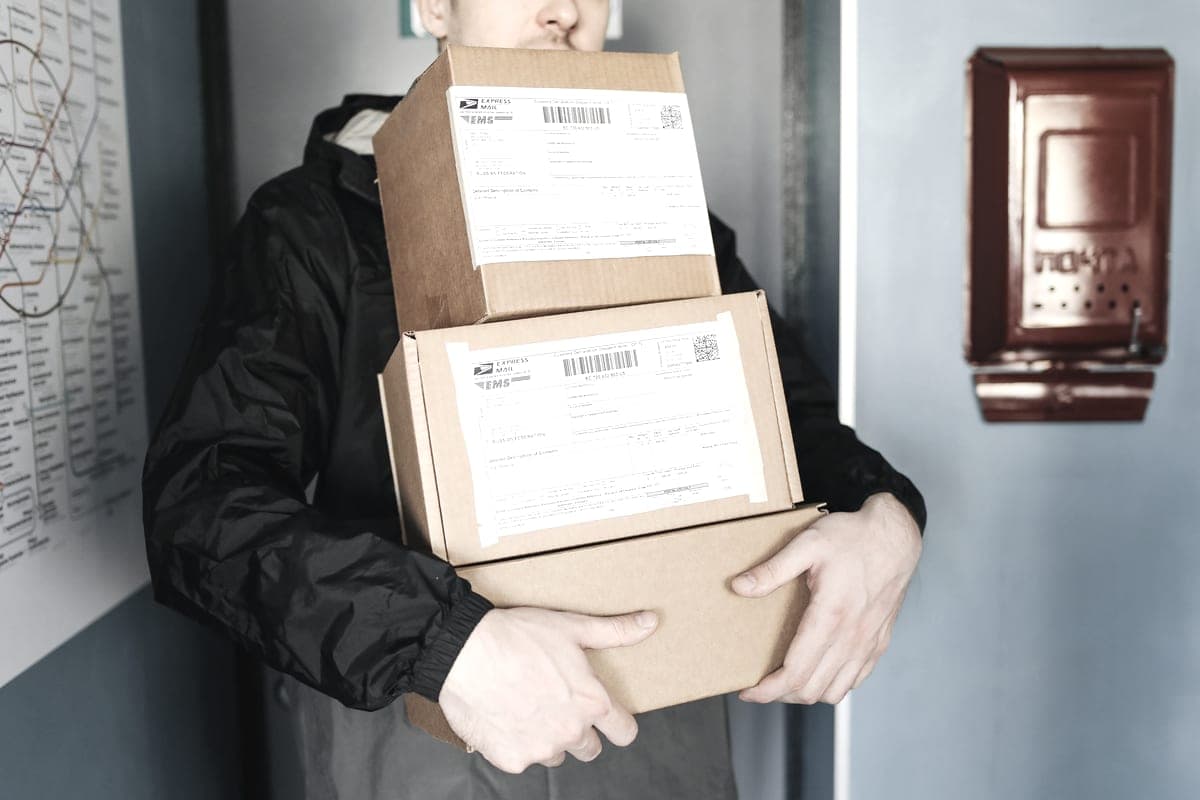
A delivery driver carrying parcels with printed shipping labels
Brother QL-1110NWBcDirect thermal: no ink, toner or ribbon, about 14¢ a label
The only one with no supply at all~14¢
3
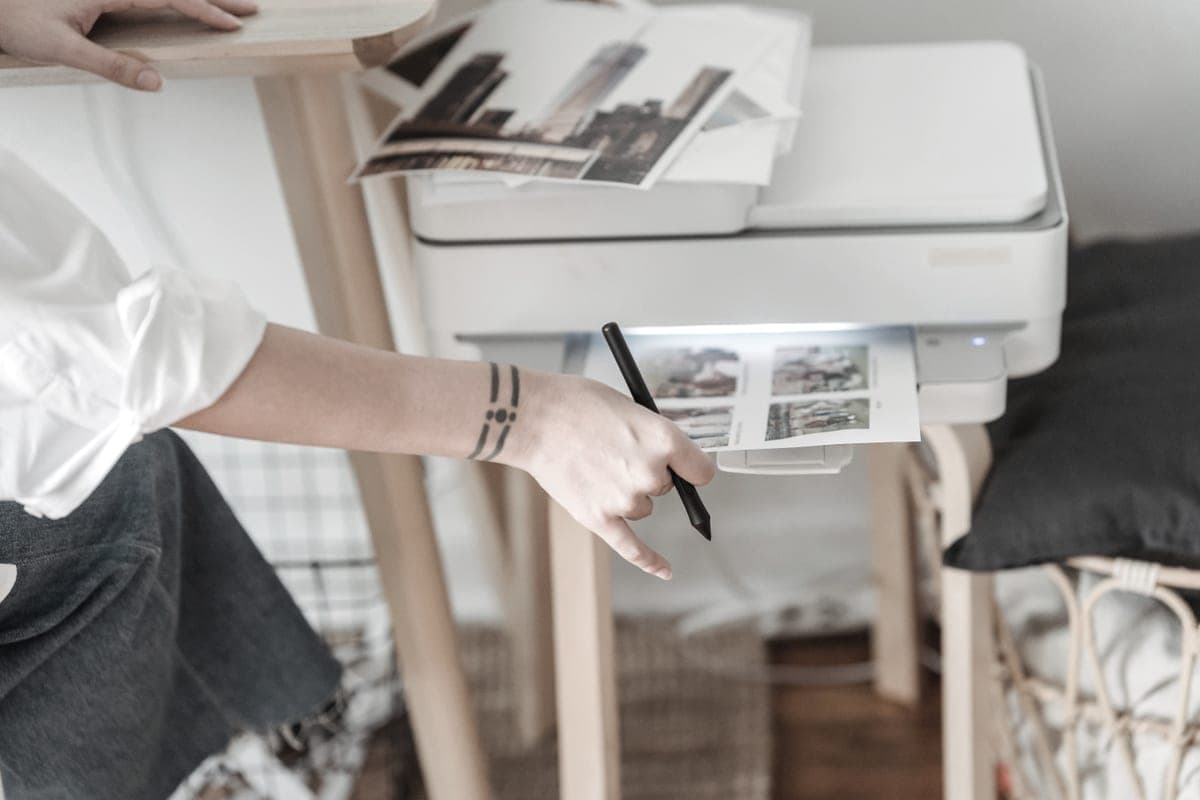
A person using a home inkjet printer at a desk beside printed sheets
Epson EcoTank ET-2800Refillable bottles instead of chipped cartridges, about 0.4 of a cent a page
If you really meant no cartridges~0.4¢

#ad — buy links are affiliate links and we may earn a commission at no cost to you. How this site is funded. We do not display live prices, so every button sends you to Amazon’s own page for the current one. Cost-per-page figures are arithmetic on supply prices we read on 27 September 2026 — here is the method.

Are there printers that don't use ink?

Yes. Laser printers use toner, a dry powder fused to the page with heat, and no liquid ink at all. Direct thermal printers go further: Brother states they need no inks, toners or ribbons, because heat darkens a coating already on the label. Thermal printers cannot print documents, only labels.

This question is usually three questions wearing one coat. Some people want a printer with no liquid in it, because the last inkjet dried out. Some want to stop buying cartridges. And a few mean it literally: is there a printer that consumes nothing? All three have real answers, and they point at different machines.

Three answers, depending on what you meant

What each printing technology actually consumes, and what that costs
TechnologyWhat it usesCan it dry out?Running cost we calculated
LaserToner — a dry powder in a cartridgeNoAbout 3.3¢ a page on a TN830XL
Direct thermalNothing: heat, on coated label stockNoAbout 14¢ a label, DK-1247
Ink tankLiquid ink, refilled from bottlesYes, if unused for long periodsAbout 0.4 of a cent a page on 522 ink
Cartridge inkjetLiquid ink in a chipped cartridgeYesVaries; the dearest route per page

Our own arithmetic for laser and tank figures: supply price divided by the manufacturer's rated yield at ISO 5% coverage, from prices read in September 2026. The thermal figure is a cost per label from the roll price and label count, which is not comparable to a cost per sheet of plain paper.

Only one row in that table has no supply in the usual sense, and it is also the only row that cannot print a letter. That trade is the heart of this page.

Laser printers: toner, not ink

A laser printer has no ink in it. The cartridge holds toner — a fine dry powder — which is given a static charge, attracted onto the page in the shape of the image, and then fused to the paper with heat. There is no liquid anywhere in the process.

That is why lasers are the standard recommendation for households that print rarely. An inkjet print head left unused for months can clog as ink dries in the nozzles; a cartridge of dry powder has nothing to dry. The full answer on whether laser printers dry out goes into what can go wrong instead, which is mostly the drum rather than the toner.

The cost is a higher price per page. At about 3.3 cents on a high-yield TN830XL against about 0.4 of a cent on bottled ink, a laser costs roughly ten times as much per black page as a tank printer. For a household printing thirty pages a month, that difference is a few dollars a year and the reliability is worth more. For a homeschool printing four hundred, it is not. Toner versus ink, in full.

Direct thermal: genuinely no supply at all

This is the literal answer. Brother states that direct thermal printing on the QL-1110NWBc means there are no inks, toners or ribbons to replace. The print head heats a coating that is already part of the label stock, and the coating darkens. Nothing is deposited, so nothing runs out.

Two limitations make this a specialist answer rather than a general one, and both are absolute.

  • It prints labels, not documents. Brother publishes labels up to four inches wide at 300 dpi on DK rolls. There is no paper tray and no letter-size path. A thermal label printer cannot print your tax return.
  • The print is not permanent. The image is a dye reaction in the coating, and it fades with heat, light and time. LabelValue states that printed direct thermal labels typically have a shelf life of around six to eight months. For a parcel going out tomorrow that is irrelevant; for anything archival it is disqualifying.

There is also a cost subtlety worth being precise about. “No ink” does not mean free: the consumable moved into the paper. A DK-1247 label costs about 14 cents from the roll price we read, against a fraction of a cent of toner on a sheet of plain paper you bought separately. The full comparison is at laser printer versus thermal printer.

If you meant no cartridges rather than no ink

This is the most common version of the question in practice. The complaint is almost never about ink as a substance — it is about chipped cartridges, their price, and the firmware that decides which ones a printer will accept.

Tank printers answer that without abandoning ink. Epson EcoTank, Canon MegaTank and HP Smart Tank all refill reservoirs built into the printer from plain bottles. A bottle has no electronics in it, so there is nothing to authenticate, nothing for a firmware update to reject, and no mechanism by which an account status could change what the hardware does. The models are in which printers have refillable ink.

Two things that are not true

“Laser printers have no consumables.” They have two. Toner is the one people know about; the drum unit is the one that surprises them. Brother rates the DR830 drum on the HL-L2460DW at approximately 15,000 pages and the DR920 on its business models at approximately 45,000, and both are replaceable parts with a price. How long toner actually lasts covers both.

“There is an inkless printer for home documents.” Not one we can recommend. Thermal technology is real but limited to label stock, and no printer in our registry prints letter-size documents without either toner or ink. If a product claims otherwise, check what it prints on before checking what it prints with.

Specifications and running costs side by side, for the printers discussed on this page.
PrinterSupply typeMono per pageColor per pageAuto duplexFeederList price
Brother HL-L2460DWToner~3.3¢mono onlyYesNo$180
Brother QL-1110NWBcThermal labels~14¢mono onlyNoNo$325
Epson EcoTank ET-2800Ink bottles~0.4¢~1.1¢NoNo$240
Brother DCP-L2640DWToner~3.3¢mono onlyYesYes$210

Cost-per-page figures are our own arithmetic: supply price divided by the manufacturer’s rated page yield, using prices read on 27 September 2026 and yields rated at the ISO 5% coverage standard. They are not measured by us and they are not current prices. Every input, and the working · run the numbers for your own printing

The picks in detail

Best printer with no ink in it

Brother HL-L2460DW

If you print black text and nothing else, this is the printer to buy. It cannot dry out, it duplexes, and Brother does not block third-party toner.

A modern printer on a minimalist office desk

Illustrative photograph of this kind of printer. We do not have this model in hand and this is not a photograph of the unit.

Check price on Amazon

#ad — we may earn a commission. How this site is funded. We do not show live prices; Amazon’s page is the price of record.

~3.3¢ per mono page

Based on a Brother TN830XL high-yield toner cartridge rated at 3,000 pages at $98.29, priced on 27 September 2026.

  • Brother TN830XL high-yield toner cartridge — rated 3,000 pages (ISO/IEC 19752), $98.29 at Brother USA, checked 27 September 2026

Yields are manufacturer-rated at the ISO 5% page-coverage standard, not measured by us, and real-world cost runs higher. Prices are not live: this is arithmetic on a price we read on the date shown, not a current price. How we calculate cost per page.

List price
$179.99 at Brother USA, checked 27 September 2026
Supply type
Toner cartridge
Print speed
Up to 36 pages per minute
Two-sided printing
Automatic
Document feeder
None
Connectivity
Dual-band wireless (2.4 GHz / 5 GHz), Ethernet or USB
Subscription
None required

What we like

  • Toner does not dry out, so it is ideal if you print in occasional bursts
  • Automatic two-sided printing at 36 pages per minute
  • Brother has publicly denied blocking third-party toner with firmware

What you give up

  • Black only - no color at all
  • Cost per page is roughly ten times a tank printer's
  • The 700-page starter cartridge runs out fast; budget for a TN830XL

If what you want is a printer that cannot dry out, clog or leak, this is the answer: a mono laser. There is no liquid anywhere in it. The TN830XL is a cartridge of dry powder rated at 3,000 pages at $98.29, about 3.3 cents a page.

Up to 36 pages a minute, automatic two-sided printing, dual-band wireless with Ethernet, $179.99 at list price when we checked. Mono only and no scanner, which is why it is cheap. This is the printer we recommend most often to households that print rarely.

Specifications read from the manufacturer’s own product page on 27 September 2026. Full cost-to-run breakdown for the Brother HL-L2460DW →

The only one with no supply at all

Brother QL-1110NWBc

A label printer, not a document printer. It needs no ink at all, which is the appeal - but Brother's DK rolls are proprietary, so the lock-in moves from the cartridge to the label.

A delivery driver carrying parcels with printed shipping labels

Illustrative photograph of this kind of printer. We do not have this model in hand and this is not a photograph of the unit.

Check price on Amazon

#ad — we may earn a commission. How this site is funded. We do not show live prices; Amazon’s page is the price of record.

~14¢ per mono page

Based on a Brother DK-1247 large shipping labels rated at 180 pages at $25.49, priced on 29 September 2026.

  • Brother DK-1247 large shipping labels — rated 180 pages (Labels per roll, as published by Brother), $25.49 at Brother USA, checked 29 September 2026

Yields are manufacturer-rated at the ISO 5% page-coverage standard, not measured by us, and real-world cost runs higher. Prices are not live: this is arithmetic on a price we read on the date shown, not a current price. How we calculate cost per page.

List price
$324.99 at Brother USA, checked 29 September 2026
Supply type
Thermal label rolls - no ink, toner or ribbon
Two-sided printing
Manual only
Document feeder
None
Connectivity
Bluetooth, Ethernet, wireless 802.11b/g/n, WirelessDirect and USB
Subscription
None required

What we like

  • No ink, no toner and no ribbon - the consumable is the label itself
  • Prints a 4-inch shipping label in one action, with no sheet to peel or trim
  • Wired Ethernet as well as Wi-Fi and Bluetooth, which is unusual at this size

What you give up

  • Only prints labels, up to 4 inches wide - it cannot print a document
  • Brother DK rolls are proprietary: this is a different lock-in, not the absence of one
  • Direct thermal print fades with heat and light, so it is wrong for anything archival

Brother states this one uses direct thermal printing, meaning there are no inks, toners or ribbons to replace. Heat darkens a coating already on the label. That is the literal answer to the question, and it comes with a hard limitation: it prints labels up to four inches wide, not documents.

Its running cost is the label itself — about 14 cents for a DK-1247 from a roll of 180 at $25.49 — which is a cost per label, not a cost per sheet of paper, and the two are not comparable. $324.99 at list price when we checked.

Specifications read from the manufacturer’s own product page on 29 September 2026.

If you really meant no cartridges

Epson EcoTank ET-2800

The cheapest way to get genuinely low-cost color printing at home, as long as you can live without an auto duplexer or a document feeder.

A person using a home inkjet printer at a desk beside printed sheets

Illustrative photograph of this kind of printer. We do not have this model in hand and this is not a photograph of the unit.

Check price on Amazon

#ad — we may earn a commission. How this site is funded. We do not show live prices; Amazon’s page is the price of record.

~0.4¢ per mono page · ~1.1¢ per color page

Based on a Epson 522 black ink bottle rated at 4,500 pages at $17.99, priced on 27 September 2026.

The color figure adds one per-page cost for each of the three color channels, because an ISO color page draws from all of them.

  • Epson 522 black ink bottle — rated 4,500 pages (ISO/IEC 24712), $17.99 at Epson US, checked 27 September 2026
  • Epson 522 color ink bottle — rated 7,500 pages (ISO/IEC 24712), $17.99 at Epson US, checked 27 September 2026

Yields are manufacturer-rated at the ISO 5% page-coverage standard, not measured by us, and real-world cost runs higher. Prices are not live: this is arithmetic on a price we read on the date shown, not a current price. How we calculate cost per page.

List price
$239.99 at Epson US, checked 27 September 2026
Supply type
Refillable ink bottles
Two-sided printing
Manual only
Document feeder
None
Connectivity
Wireless
Subscription
None required

What we like

  • Among the lowest cost per page of any printer sold for home use
  • Refillable bottles, so no chipped cartridge can be locked out by firmware
  • Comes with enough ink in the box to last most households a long time

What you give up

  • No automatic two-sided printing, so paper costs twice what it needs to
  • Flatbed scanner only - no document feeder for multi-page scans
  • Inkjets still need to be used occasionally or the print head can clog

Many people asking this question do not mean ink at all — they mean cartridges, and the price and the lock-in that come with them. A tank printer still uses ink, but it arrives in a plain bottle with no electronics in it, so there is nothing for a printer to authenticate.

About 0.4 of a cent a black page and 1.1 cents for an ISO color page on the prices we read, at a $239.99 list price. If the goal was cheap color rather than no liquid, this is the right end of the shop.

Specifications read from the manufacturer’s own product page on 27 September 2026. Full cost-to-run breakdown for the Epson EcoTank ET-2800 →

Questions people actually ask

Are there printers that don't use ink?

Yes. Laser printers use toner, a dry powder, with no liquid ink at all. Direct thermal printers use no supply at all — heat darkens a coating on the label stock — but they print labels rather than documents.

Which printer does not require ink?

A laser printer is the practical answer for documents: toner powder instead of ink, nothing to dry out, about 3.3 cents a page on a high-yield Brother cartridge. A direct thermal label printer is the literal answer, but it cannot print a document.

Is toner the same as ink?

No. Toner is a dry powder fused to the page with heat; ink is a liquid sprayed onto it. Toner cannot dry out or clog, which is why lasers suit households that print rarely. Ink is far cheaper per page in a bottle-fed tank printer.

Do inkless thermal printers really have no running cost?

No — the cost moved into the paper. There is no ink, toner or ribbon, but the coated label stock is the consumable: about 14 cents for a DK-1247 label on the roll price we read.

Can a thermal printer print documents?

No. Brother publishes labels up to four inches wide on DK rolls for the QL-1110NWBc. There is no letter-size paper path, so it cannot print a document of any kind.

What is the cheapest printer to run that uses no ink?

Of the lasers we price, the Brother HL-L6210DW on ultra-high-yield toner. Of the household lasers, the Brother HL-L2460DW at about 3.3 cents a page. Both are dearer per page than any bottle-fed tank printer.

Sources