

All-in-one is a marketing word, not a specification. On a refillable tank printer it can mean a flatbed glass you lift a lid to use, a fifty-sheet feeder that swallows a contract whole, or something in between with an automatic duplexer and no feeder at all. The gap between the cheapest and the most complete machine on this page is $310, and almost none of that difference is the printing.
Which all-in-one tank printer should most people buy?
For most households, the Epson EcoTank ET-2850 at $349.99: it prints, scans, copies and duplexes automatically, at about 0.3 of a cent a mono page. Spend up to the ET-4950 only if you genuinely scan stacks of paper, and spend down to the ET-2400 at $189.99 if two-sided printing does not matter to you — the ink, and therefore the running cost, is the same.
How we picked
We started from a definition rather than a ranking. To be on this page a printer has to refill from bottles rather than cartridges, and it has to scan and copy — a print-only machine is not an all-in-one however it is marketed. That alone removes most of what retailers file under the term.
We then sorted the survivors by what their scanning hardware actually is, because that is the specification that varies and the one people regret getting wrong. Flatbed only, flatbed plus an automatic document feeder, and whether the printer can put ink on both sides of a sheet on its own.
Every price is a manufacturer list price read from the manufacturer’s own product page on the date in our sources, except the Canon, where Canon would not serve us a price and we have said so. Every cost per page is our own arithmetic on a published supply price and a published rated yield. One model that would otherwise have appeared here was dropped because its maker now lists it as discontinued, and we say which below.
What all-in-one actually means on a tank printer
There are three tiers, and the marketing word covers all of them equally.
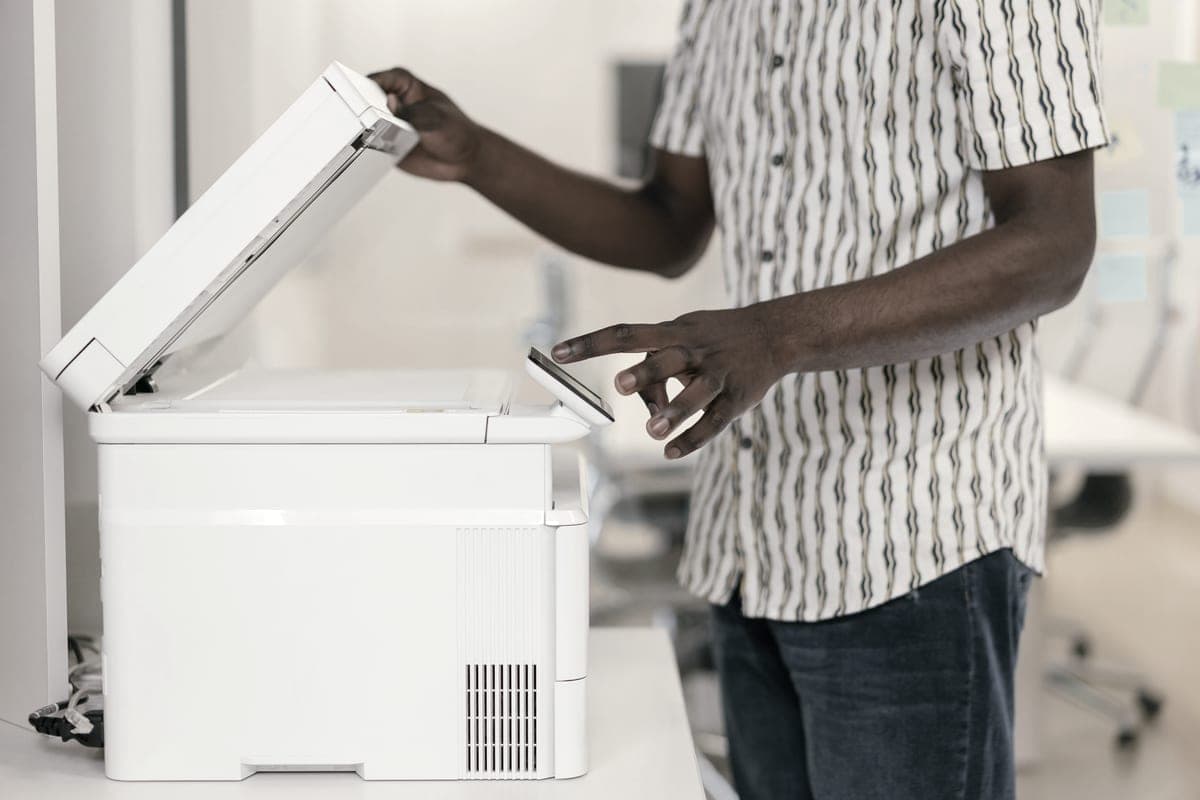
- Flatbed only. A sheet of glass and a lid. Fine for a passport page, a photograph or one form. Painful for a twelve-page document, because it is twelve separate actions. The ET-2400, ET-2800 and the Canon G3270 are all in this tier.
- Flatbed plus automatic duplex printing. The scanner is unchanged, but the printer can print on both sides of a sheet by itself. This is the ET-2850, and it is a paper-cost feature rather than a scanning one.
- Flatbed plus an automatic document feeder. A stack goes in the top and the machine works through it. On tank printers this is rare and expensive: of the models we cover, the ET-4950 at $499.99 and the ET-4800 are the only ones that have it.
| Printer | Scanning | Auto duplex | List price | Mono per page | Color per page |
|---|---|---|---|---|---|
| Epson EcoTank ET-2850 | Flatbed | Yes | $349.99 | ~0.3¢ | ~1.2¢ |
| Epson EcoTank ET-4950 | Flatbed + document feeder | Yes | $499.99 | ~0.3¢ | ~1.2¢ |
| Canon PIXMA MegaTank G3270 | Flatbed | Not published | $248.99 (retailer) | ~0.3¢ | ~0.8¢ |
| Epson EcoTank ET-2400 | Flatbed | No | $189.99 | ~0.4¢ | ~1.1¢ |
| Epson EcoTank ET-2800 | Flatbed | No | $239.99 | ~0.4¢ | ~1.1¢ |
| Brother DCP-L2640DW (mono laser) | Flatbed + 50-page feeder | Yes | $209.99 | ~3.3¢ | No color |
List prices as published on each manufacturer's own product page on the dates in our sources, except the Canon, which is a retailer listing because Canon would not show us a price. Cost per page is supply price divided by the manufacturer's rated yield at ISO 5% coverage; your real cost will be higher.
Read the table once for the scanning column and once for the price column and the shape of the decision appears. Every tank printer here costs a fraction of a cent a page. What you are buying with the extra hundreds of dollars is paper handling.
The three decisions that pick your model
Do you print documents longer than a page?
If yes, buy automatic duplex and stop thinking about it. A ream of plain letter paper is around a cent a sheet, which sounds trivial until you notice that on a flatbed-only EcoTank the paper costs more per page than the ink does. Duplex printing is the only feature on this page that reduces a running cost rather than adding a convenience.
Do you scan stacks, or single sheets?
The honest threshold is about five pages at a time, regularly. Below that, a phone scanning app is faster than walking to the printer and the feeder is dead money. Above it, the feeder is the best-value item on the specification sheet — and on a tank printer it costs $150 more than the ET-2850 and $310 more than the ET-2400. The feeder question in full, including the cheaper way to solve it.
Is most of what you print color?
If it is, look at the color column rather than the mono one. The Canon G3270 is the cheapest color pages on this site at about 0.8 of a cent, and the 522 family in the cheap EcoTanks is rated higher on color than the 502 family in the dearer ones. If almost everything you print is black text, the ranking flips and a mono laser enters the conversation.
Why the cost per page barely separates these machines
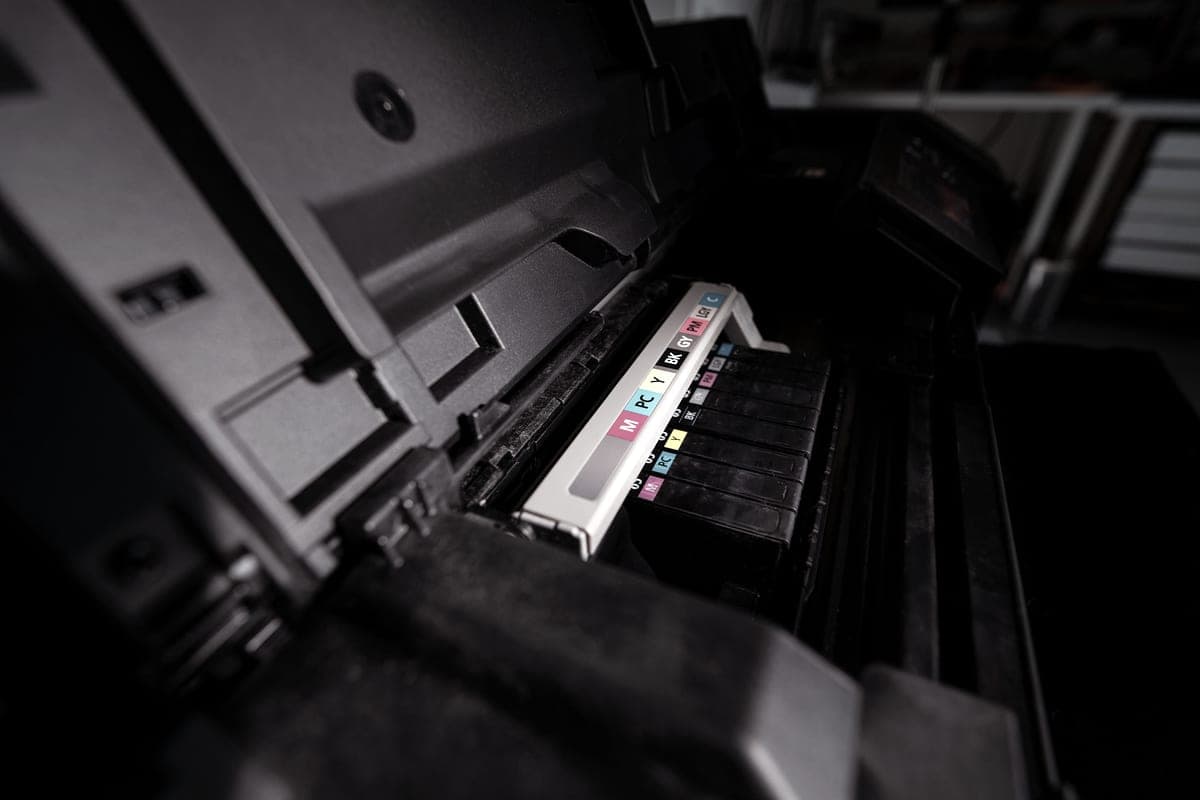
This is the part most roundups get backwards. Every Epson EcoTank on this page runs one of two bottle families, and both are so cheap per page that the difference between them is lost in the noise of how much you actually print. A 502 black bottle is rated at 7,500 pages at ISO/IEC 24712; a 522 black is rated at 4,500. Both come out as a fraction of one cent.
At 100 pages a month, three years of black ink on the 502 family is about $12, against $14 on the 522 family. The gap is a rounding error next to the $160 between the printers. Published industry figures put ordinary inkjet printing at about 7.5 cents a page mono and about 20 cents a page color, per Toner Buzz — which is the real comparison, and it is not close.
The obligation that comes with every machine here
An inkjet print head has to stay wet. Leave any printer on this page unused for a couple of months and you may come back to a clogged nozzle and a cleaning cycle that spends ink to recover. Tank printers are no more prone to this than cartridge inkjets — and no less.
The practical rule is to print something, anything, every week or two. If you know perfectly well that you will not, the honest recommendation is not a tank printer at all: a mono laser is completely indifferent to being ignored for a season. What clogging actually is, and how to avoid it · tank printers for people who print rarely.
What we left off this page, and why
- Epson EcoTank ET-3850. On paper it belonged here: a feeder, auto duplex, Ethernet and the cheap 502 ink. When we checked Epson’s own product page on 14 October 2026 it was marked discontinued, with the ET-3950 named as its replacement, and the ET-3950 was itself showing out of stock at Epson. We do not recommend a machine its maker has retired, so neither is a pick here.
- Epson EcoTank ET-4800. It has a feeder and takes the cheap 522 ink, which makes it the value route to a document feeder on paper. Epson published no list price on the page we read, its own store showed it out of stock, and Epson does not state automatic duplex for it. Three unknowns is too many to rank it.
- HP Smart Tank 7001. It is genuinely bottle-fed and needs no subscription to print. We could not read a bottle price from HP on the date we checked, so we cannot publish a cost per page for it, and an unknown input means no number rather than a guessed one. HP’s Dynamic Security history on its cartridge printers is a separate reason many buyers skip the brand. Our full read on Smart Tank · Dynamic Security.