Which laser printer is best for legal-size paper?
Legal paper is a professional-services problem. Contracts, closing documents, engagement letters, loan packets, deposition exhibits and a stubborn set of court and county forms all arrive at 8.5 by 14 inches, and a printer that quietly tops out at letter turns every one of them into a scaling dialog and a bad photocopy. The good news is that the hardware is rarely the obstacle. The bad news is that the specification you need is three clicks down a page nobody reads.
How we picked
We read the paper handling section of each manufacturer specification page and recorded three things separately, because they are three different claims: the sizes each input accepts, the sizes the automatic duplexer accepts, and the sizes the scanner accepts. Plenty of printers satisfy the first and fail the second.
A printer only appears above if the manufacturer names Legal in the main tray and names Legal for automatic two-sided printing. Where a specification is silent — the scanner maximum on Brother’s household all-in-ones is the live example — we say it is silent rather than filling the gap in. We have no units in hand and no lab; every figure here is published specification or our own arithmetic on dated supply prices.
What each model actually publishes
| Printer | Legal in main tray | Second input | Legal auto duplex | Per page |
|---|---|---|---|---|
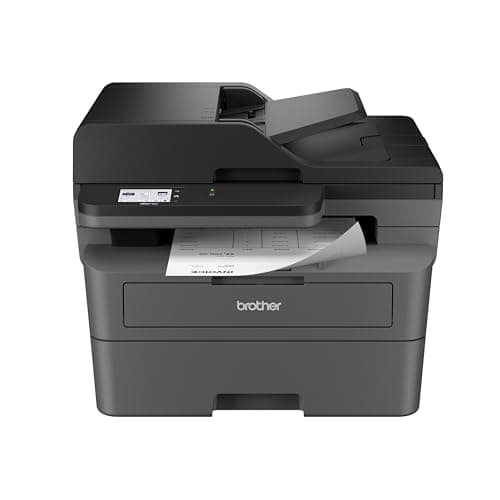
| Brother MFC-L2820DW | Yes, 250 sheets | Manual slot, 1 sheet, up to 14 in | Yes | ~3.3¢ |
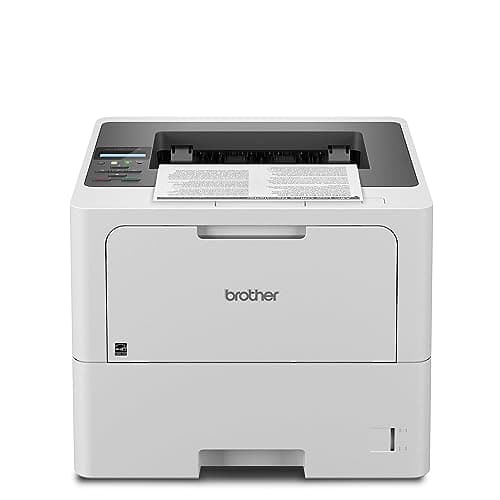
| Brother HL-L6210DW | Yes, 520 sheets | Multi-purpose tray, 100 sheets, Legal named | Yes | ~1.3¢ |
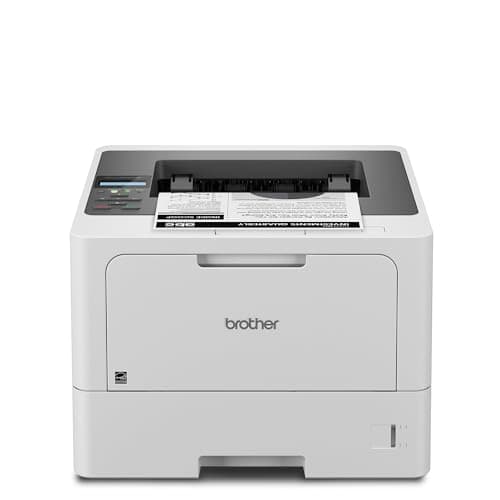
| Brother HL-L5210DW | Yes, 250 sheets | Multi-purpose tray, 100 sheets, Legal named | Yes | ~1.9¢ |
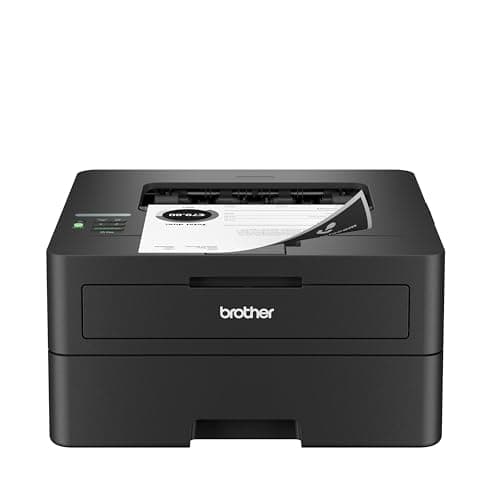
| Brother HL-L2460DW | Yes, 250 sheets | Manual slot, 1 sheet, up to 14 in | Yes | ~3.3¢ |
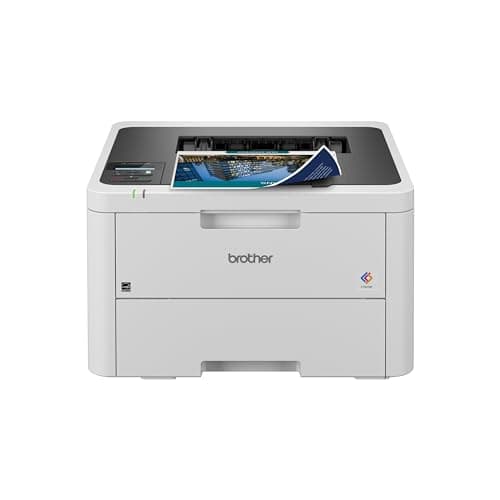
| Brother HL-L3220CDW | Yes, 250 sheets | Manual slot, 1 sheet, up to 14 in | Yes | ~3.2¢ black channel |
Sizes and capacities as published on each model’s Brother USA specification page. Cost per page is our arithmetic on the supply prices we read on 29 September 2026 — the method in full.
The pattern is worth stating plainly: on Brother’s current laser range, legal printing is standard. It is not a premium feature and it is not a reason to spend more. What you are deciding between is a one-sheet slot and a hundred-sheet second tray, and that decision is about how often you switch sizes.
The duplexer is where cheap printers fail
An automatic duplexer has to pull a sheet back inside the machine, reverse it and feed it again, and the reversing path has a maximum length. That is why a printer can advertise legal printing and still refuse to duplex it: the tray takes 14 inches, the duplexer does not.
Every model on this page names Letter and Legal for automatic two-sided printing, which is the specification to check and the one most buyers never look at. A twelve-page legal contract printed single-sided is twelve sheets; on the duplexer it is six. Over a year of contracts that is a case of paper and a visibly thinner file. What duplex printing is and why it halves your paper bill.
The scanner is the question nobody asks first
Half the people searching for a legal-size printer are really trying to copy legal documents, and the scanner is a separate piece of hardware with its own limits. A flatbed glass has physical dimensions; a document feeder has a maximum document length. Neither has anything to do with the paper tray.
On the Brother all-in-ones we cover, the specification pages we read publish the feeder’s minimum document size and its 50-sheet capacity, but not a maximum document length, and do not state the flatbed glass dimensions. We therefore do not tell you those machines will copy a legal original, because we have not read a specification that says so. If copying legal is the purchase justification, confirm the scan area with Brother before you buy — that is ten minutes that saves a return.
What is confirmed is the printing: feed legal paper in the tray, print legal from your computer, duplex it automatically. That covers the large majority of legal-size printing, which is output rather than reproduction.
Keeping letter and legal loaded at the same time
This is the single feature that separates the business models from the household ones, and it is the reason this page recommends a print-only machine in second place. A 100-sheet multi-purpose tray that names Legal means two stocks stay loaded indefinitely. A one-sheet manual slot means you reconfigure the tray guides every time the work changes size.
- Legal is occasional. A few packets a month. The one-sheet slot is genuinely fine, and the HL-L2460DW at $179.99 is the right amount of printer. Set the tray to letter and feed legal by hand.
- Legal is daily. Reconfiguring a tray twice a day is the kind of small friction that makes people hate a printer. Buy the multi-purpose tray and stop thinking about it.
- Legal is the default and letter is occasional. Load legal in the main tray and letter in the multi-purpose tray. Same hardware, inverted.
Which lasers have a genuine second tray works through that distinction in more detail, including what an optional third tray costs you.
Legal paper usually means volume, and volume means toner
The people who need legal paper tend to print a lot of it, which quietly turns this into a cost-per-page question. Stepping from Brother’s household range to its business range changes the cartridge family, and that is a far bigger financial event than any paper specification on this page.
| Cartridge | Rated yield | Price we read | Per page |
|---|---|---|---|
| Brother TN830XL high-yield toner cartridge | 3,000 pages | $98.29 | ~3.3¢ |
| Brother TN830 standard-yield toner cartridge | 1,200 pages | $60.99 | ~5.1¢ |
| Brother TN229XL black high-yield toner cartridge | 3,000 pages | $96.29 | ~3.2¢ |
| Canon 125 black toner cartridge | 1,600 pages | $96.95 | ~6.1¢ |
Yields are manufacturer-rated (ISO/IEC 19752 for mono, 19798 for color); prices read on 27 September 2026 from the sources at the foot of this page. Our arithmetic is supply price divided by rated yield — the method.
At 500 pages a month, three years of toner is $590 on the household cartridge against $241 on the ultra-high-yield one. That gap is larger than the difference in printer price, which is why a legal-size search often ends at a bigger machine than the question implied. Laser cost per page, worked through in full.
What we left out, and why
- Canon imageCLASS LBP6030w. Retailer listings name legal support and a 150-sheet tray, but Canon’s own site would not serve us a specification page on the date we checked, and we do not build a recommendation on a reseller’s spec table. It is also the dearest printer per page we have calculated, at about 6.1 cents on the genuine Canon 125 cartridge, and it has no automatic duplexer — so even if the tray takes legal, it cannot turn a legal sheet over.
- Ink tank printers. They are far cheaper per page and several handle legal paper, but we have not read a legal-size paper specification for the tank models we cover and will not imply one. If running cost matters more to you than the paper path, the ink tank versus laser comparison is the page to read first.
- Tabloid and ledger (11 by 17 in) machines. A different and much more expensive category. Nothing on this page prints wider than 8.5 inches.
Four things to check before you pay
- Does the duplexer name Legal? Not the tray — the duplex row. This is the specification that fails most often.
- Does the second input name Legal? A multi-purpose tray that lists Legal is what lets both sizes stay loaded.
- If you will scan legal, what does the scanner accept? Ask the manufacturer for the glass dimensions and the feeder’s maximum document length. Tray size tells you nothing about this.
- What does the replacement cartridge cost per page? Legal printing is usually high-volume printing, and the cartridge decides the three-year bill far more than the printer does.
If the legal work in question is checks, invoices or statements rather than contracts, two adjacent pages are more specific: printers for printing checks and cost per page for invoice printing. And if the machine will be shared, the small-office picks weigh the feeder against the paper capacity.